
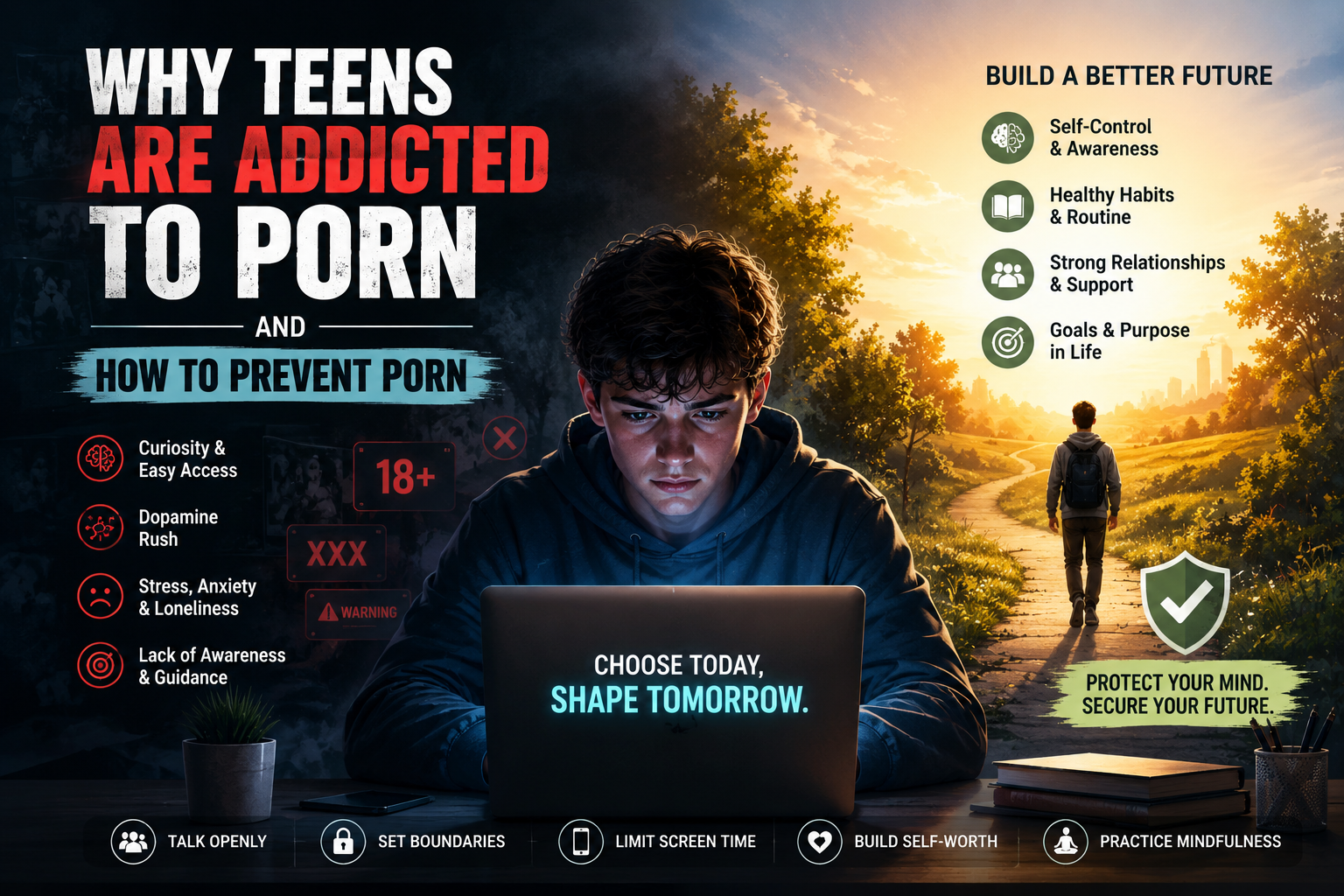
Why Teens Are Addicted to Porn and How to Prevent Porn
What is it that so many teenagers are struggling with yet do not even fully understand?
It may begin with curiosity. One click. One video. And then it is a habit. And by the time they notice it, it begins to influence their concentration, self-esteem and their lives.
In 2026, it is immediate, personalized and unlimited. Adolescents are being raised in a world where exposure is very early usually without information or care. Curiosity soon becomes a habit due to dopamine and the habit loop.
It is not merely a matter of behavior. It concerns brain conditioning, emotional void and unstructuredness. Fear or punishment is not the actual PMO Recovery solution. It is knowing the cause and creating a system that is effective and sustainable in stopping the consumption of porn.
What Do You Know About Porn Addiction in Teens?
Porn addiction is not merely a content viewing process. It deals with lack of control over impulses.
Common patterns include:
- Seeing it again and again, even after knowing it is bad.
- Problem concentrating on studies.
- Increased isolation
- Conscience and repentance.
Adolescents are particularly susceptible, as their brains are only still developing. When one is unaware of this, it is hard to avoid developing the habit of porn.
Why Teens Are Getting Addicted to Porn
The addiction of teens to porn is not accidental and not caused only by the lack of control. It is a combination of early exposure, brain chemistry, emotional gaps, and environment. In 2026, adolescents are increasing in hyper-digital world where there is nonstop stimulation and lack of guidance. In order to actually avoid porn addiction, you must have the knowledge of why it begins and why it persists.
Unlimited Access With Zero Barriers
Teenagers of today do not need to look to find content. It finds them. Exposure can occur by chance with smartphones, private browsing, and feed-driven algorithms, and then be replicated very easily. This absence of control and immediate access eliminates friction and it becomes more difficult to avoid the development of porn habits when young.
Curiosity Without Real Education
Adolescence is a time of possible wondering about the body, relationships and intimacy. In the absence of adequate education or those discussions, adolescents resort to the internet to seek answers. Porn turns into their teacher and it sets unrealistic expectations and consumption. Unconsciously, this interest rapidly turns into a habit that is hard to resist developing an addiction to porn.
Also See- Best Way to Stop Masturbation Addiction Permanently in USA
Dopamine-Driven Habit Formation
Porn is not only a visual stimulus, but a great dopamine release agent. Whenever a teen views it, the brain releases a lot of pleasure chemicals. As time goes on, the brain begins to demand the same stimulation repeatedly. This forms a circle:
- Stimulus (trigger) → Dope (consumption) → Repeat.
This is a loop that should be broken by conscious effort since it is difficult to avoid porn addiction.
Lack of Structure and Excess Idle Time
The unstructured days allow room to exercise unhealthy practices. When teens have:
- Too much free time
- No clear routine
- Late-night screen access
their mind inclines of its own to easy stimulation. In the absence of fruitful interaction, it is hard to avoid the development of pornography as an everyday practice.
Emotional Escape From Stress, Loneliness, or Pressure
Lots of teens do not only look at porn due to curiosity, they rely on it as an escape.
- Academic pressure
- Social anxiety
- Being lonely or not understood.
Porn helps in alleviating these feelings. With time, the brain learns to relate it to comfort and thus becomes difficult to quit and difficult to avoid porn addiction.
Peer Influence and Normalization
Exposure in most instances begins with friends or peer conversations. It is normal when a person speaks about something casually or even pushes it. This minimizes the inhibition and maximizes exploration. When normalized, it is much more difficult to challenge the behavior or avoid developing porn habits.
Digital Overstimulation Weakening Self-Control
Teenagers now are already exposed to a high level of stimulation of reels, games, and uninterrupted content. This disrupts concentration and discipline. When the brain becomes accustomed to quick gratification, it becomes hard to resist greater stimulation such as porn. This further complicates the process of avoiding porn addiction without some form of discipline.
How Porn Addiction Affects Teens
Addiction among teens to porn is not only related to the habit.
It gradually recreates their thinking, emotional, focus and behavior patterns. The effects are not always instant, thus making it unnoticed initially. However, in the long run, it begins to impact various aspects of life, including academics, self-confidence, and emotional stability. To really avoid the long-term harm of porn addiction, it is important to understand these effects.
Sharp Decline in Focus and Academic Performance
The brain becomes conditioned to get fast stimulation from porn. Consequently, typical tasks such as studying or reading begin to get monotonous and challenging. Adolescents are unable to focus, alternate tasks, and lose interest in long-term objectives. This directly influences academic performance and complicates its consistency, and this is why the initial steps to avoid porn habits are paramount.
Constant Mental Fatigue and Low Energy
The teens can become fatigued during the day, even without engaging in physical activity. This is due to the overstimulation of the brain which does not receive adequate mental rest. In the long run, it results in loss of motivation, enthusiasm and inability to do productive things and it becomes more difficult to maintain discipline.
Drop in Confidence and Self-Image
The frequent use and guilt lead to inner conflict. Adolescents can begin to feel embarrassed, helpless, or uncontrolled. This will influence their self-perception and decrease self-confidence. They can escape troubles, are afraid to speak out and even feel trapped in their mind and this is even more reason why it is better to avoid porn addiction at a tender age.
Increased Isolation and Social Withdrawal
Over time, teens can begin to shun social interaction as the habit develops.
- Spending less time with others.
- Less interest in friendships.
- Reduced involvement in activities.
This isolation reinforces the cycle and makes it more difficult to break and become more emotionally dependent on the habit.
Distorted Understanding of Relationships and Reality
Porn gives images of unrealistic and exaggerated situations. Adolescents who use it frequently might form wrongful understandings regarding relationships, anticipations, and emotional attachment. This may influence future relations, and it becomes difficult to develop healthy relationships.
Reduced Emotional Control and Increased Irritability
Emotional balance is influenced by overstimulation. Teenagers can be more irritable, impatient, or frustrated. Minor problems can elicit a powerful response as the brain is already in a hyperaroused state. This emotional instability impacts on relationships and day to day life.
Loss of Discipline and Weak Self-Control
The power of saying no is diluted by addiction. After the brain becomes accustomed to immediate gratification, it becomes difficult to resist urges. This does not only impact on a single habit, it extends to other things such as studies, routine and personal goals. The discipline has to be reinforced to avoid dependency on porn.
Sleep Disturbances and Late-Night Dependency
This habit is practiced by many teens at late hours thus interfering with sleep patterns. Lack of sleep causes fatigue, lack of concentration and loss of energy the following day. This forms a circle where fatigue enhances the chances of repeating the behavior.
How to Prevent Porn in Teens Effectively
Fear, restriction and constant monitoring do not help in stopping the habit of porns among teens. That will result in secrecy rather than control.
It is awareness, structure and good mental discipline that bring about real prevention.
Adolescents require a framework that assists them to comprehend their actions, control their impulses, and remain involved in more healthful conduct. The habit becomes weak automatically when the system is correct.
Build Awareness Before Trying to Control Behavior
The majority of adolescents are not even aware of what they are getting into. They are just looking on the surface and not the long-term effect.
- Explain how addiction works
- Help them understand dopamine and habit loops
- Discuss real-life consequences calmly
Increased awareness will make resistance a natural thing. This is an initial measure of avoiding porn addiction.
Create a Structured Daily Routine That Leaves No Idle Gaps
Idle time is one of the biggest triggers.
- Fixed study hours
- Scheduled physical activity
- Defined sleep routine
Organized day keeps the mind active and minimizes the risk of an individual falling into bad habits. Here consistency contributes significantly in assisting the teens to avoid the use of pornography.
Control Digital Exposure Without Making It Feel Like Punishment
Access is the biggest enabler.
- Limit late-night phone usage
- Avoid unsupervised long screen time
- Use devices in shared spaces when possible
The goal is not strict restriction but smart control. Reducing exposure makes it easier to prevent porn triggers.
Replace the Habit With Stronger Alternatives
You cannot remove a habit without replacing it.
- Sports or physical activities
- Skill-building (coding, design, music)
- Reading or creative hobbies
The stronger the alternative, the weaker the urge. This is one of the most practical ways to prevent porn dependency.
Strengthen Discipline Through Small Daily Wins
Self-control is built gradually.
- Set small goals
- Track progress
- Reward consistency
When teens experience control in small areas, it reflects in bigger habits too. This helps build the discipline needed to prevent porn addiction.
Encourage Open Communication Without Judgment
Silence increases the problem.
- Allow honest conversations
- Avoid anger or punishment
- Listen without interrupting
When teens feel safe, they are more likely to share struggles and seek help. This openness is critical to prevent porn habits from becoming secret patterns.
Manage Emotional Triggers Instead of Ignoring Them
Many teens use porn as an escape.
- Academic stress
- Loneliness
- Social pressure
Helping them handle these emotions in healthier ways reduces dependency. Addressing the root cause is essential to prevent porn addiction.
Improve Sleep and Night-Time Discipline
Late-night habits are the most vulnerable time.
- Fixed sleep schedule
- No devices before bed
- Calm pre-sleep routine
Better sleep reduces urges and improves mental control, making it easier to prevent porn usage.
Introduce Dopamine Discipline Early
Teens need to understand how their brain reacts to stimulation.
- Reduce instant gratification habits
- Encourage delayed rewards
- Focus on long-term goals
Seek Structured Guidance When Needed
If the habit feels repetitive or uncontrollable, external support helps.
- Identify triggers
- Build control mechanisms
- Create a structured plan
Guidance ensures that efforts are directed correctly and helps teens prevent porn addiction in a sustainable way.
Conclusion
Teen porn addiction is not a phase. It is a trend, which when overlooked, may impact concentration, self-esteem, discipline, and general life direction. The longer it is, the more it influences the way a teen thinks, acts and reacts to life difficulties.
The positive thing is, this trend is breakable.
But not by sporadic suggestions or provisional prohibitions. It entails a systematic arrangement, discipl
ine and appropriate state of mind, just to avoid the habit of pornography and reconstruct the control.
Using effective practices, individualized one-on-one assistance, and a strong emphasis on disciplining dopamine and controlling habits, Mental Health Self Care assists adolescents and others not only to quit the habit, but also to remove the cause of the addiction.
In a program led by Radheshyam More, a specialist in mental health recovery, people are being taught how to regain control of their minds, rebuild focus and develop a disciplined lifestyle to support long-term development.




Pingback: How to Stop Watching Porn When You Have Tried Everything