
PMO Recovery Book in USA_ A Gem for People Struggling with Negative Thoughts
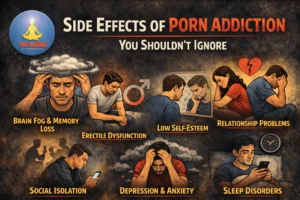
Mental health is a popular topic of discourse in the United States. However, there is one root cause of such negative thinking, emotional volatility, and diminishing concentration: PMO conditioning. Numerous practitioners, college students and company actors grapple with:
- Constant pessimistic thoughts.
- Mental fog
- Emotional restlessness
- Reduced discipline
- Digital overstimulation
They experiment with therapy, productivity systems, motivational content, and even medication. Nevertheless, the fundamental neurological imbalance remains unchanged.
The PMO recovery book by Radheshyam More deals with this underlying problem. It does not read like a motivational self-help book. It is an organized remedial guide that is based on brain rewiring, discipline of dopamine, and transformation of Brahmacharya.
The book is unique in the context of the USA since it links PMO conditioning to the negative patterns of thoughts and decreasing inner stability.
Why Negative Thoughts Are Not Just Psychological
This is one of the most powerful pieces of wisdom in the PMO Recovery Book:
Negative thinking can be neurological in nature, and it is at times, emotional.
The continual PMO behaviors develop the brain to:
- Seek high-intensity reward
- Avoid discomfort
- Reduce tolerance for stress
- Lower dopamine sensitivity
- Amplify emotional reactivity
Once dopamine loop cycles and even crashes repeatedly, the brain starts to work in depletion mode. The direct contribution of this depletion to:
- Low motivation
- Self-doubt
- Irritability
- Overthinking
- Lack of confidence
According to the book, it is impossible to simply think positive and be effective before correcting the imbalance of the reward-system.
How the PMO Recovery Book Explains the PMO Cycle
The way the PMO cycle is broken down is one of the best parts of PMO Recovery Courses by Radheshyam More. The book does not view it as a bad habit, but rather as a foreseeable neurological circuit. This is a systematic dissection that eliminates confusion and makes the reader realize why this cycle is perceived as powerful, repetitive, and hard to break.
It is a logical, layered, and performance-oriented explanation, mainly applicable to the reader who works in a high-pressure setting.
1. The Trigger Phase: Emotional Activation, Not Physical Desire
One of the first critical distinctions that the book makes is the fact that PMO hardly starts with physical need. It starts with emotional unease.
Triggers often include:
- Stress from deadlines
- Boredom after long work hours
- Loneliness or isolation
- Fatigue
- Performance anxiety
The brain wants a quick solution rather than addressing the emotional root. This is where the loop begins. Stressing that triggers have not been identified helps Radheshyam More make the point that the problem is still being mislabeled by readers.
2. The Escape Phase: Instant Dopamine Relief
Once activated, the brain gravitates towards well-known ways of relief. PMO induces instant stimulation that in the short run diminishes emotional pain.
This phase is described as:
- A rapid dopamine spike
- A short-term emotional numbing
- A quick distraction from stress
The relief is explained as a neurological healing and not emotional healing as described in the book. It is a short-lived inappropriation of unresolved pain.
3. The Reinforcement Phase: Conditioning the Brain
When this is repeated, the brain also begins to associate stress with stimulation automatically.
It is at this point that conditioning becomes stronger.The book describes the mechanism through which neural pathways develop:
- Faster
- More automatic
- Less conscious
- Less prone to disruptions.
The behavior becomes less of a choice and more of a reflex over time. This is a critical insight. It is clear that the readers are not weak; they are conditioned, as the book makes it clear.
4. The Crash Phase: Dopamine Depletion and Negative Thoughts
Dopamine decreases after stimulation spike.
This crash leads to:
- Mental fatigue
- Reduced motivation
- Irritability
- Self-criticism
- Brain fog
The negative thinking patterns have a strong connection with this phase in this book. It states that much of the continuous negative thinking is a biochemical expression of recurrent dopamine crash. It is perhaps the best part of the book as it rebranded negativity as neurological depletion and not a character defect.
5. The Guilt Phase: Emotional Amplification
After the crash, it is associated with regret or guilt by many people.
This guilt creates:
- Identity conflict
- Reduced self-respect
- Internal frustration
Ironically, it is the subsequent trigger that is the emotional discomfort, and the cycle is repeated.
The book demonstrates that, rather than preventing the behavior, guilt reinforces the loop.
6. The Normalization Phase: Habit Becomes Identity
As the repetition occurs, PMO becomes habitually a routine rather than a behavior.
The brain:
- Anticipates the behavior
- Seeks it under mild stress
- Justifies it through rationalization
At this point, the individual will even be unaware of how deep the pattern has become.
Radheshyam More points out that it is at this point where discipline has to take the place of denial.
7. The Rewiring Opportunity: Breaking the Loop Through Structure
The last, and most significant, in the explanation is this: The brain can be reconditioned out of the cycle, should it be possible to condition it into it. The book substitutes the cycle analysis with a rewiring strategy:
- Interrupt the trigger
- Reduce overstimulation
- Stabilize dopamine
- Install disciplined routines
Redirect energy into purposeful action
This renders the explanation empowering and not discouraging.
Brain Rewiring Framework Presented in the PMO Recovery Book
PMO Recovery also presents a systematic rewiring method, unlike books on emotional recovery.
Awareness Without Guilt
The book disavows shame of the equation and substitutes it with the responsibility. The first neurological interruption of the cycle is given as awareness.
Dopamine Stabilization
Readers are instructed to minimize overstimulation and make it gradually in order to restore natural sensitization to reward.
Emotional Tolerance Building
People are conditioned to sit with discomfort as opposed to avoiding it. This enhances internal control channel.
Formal Discipline Implementation.
Neurological reinforcement is referred to as routine. Discipline is not an incentive it is practice.
Energy Redirection
This regained clarity of mind needs to be channeled to professional development, leadership, and life with meaning.
This structure renders the book realistic, rather than philosophical.
Why This Book Is Highly Relevant in the USA Corporate Environment
Corporate America operates on:
- High digital exposure
- Constant performance expectations
- Screen dependency
- Isolation under pressure
- Productivity without recovery
The PMO Recovery Book explains how this environment amplifies PMO conditioning and negative thought cycles.
Professionals begin to experience:
- Decreased attention span
- Emotional volatility
- Burnout disguised as fatigue
- Confidence erosion
- Quiet dependency on stimulation
The book reframes recovery as performance restoration.
Integration of Brahmacharya with Modern Neuroscience
A unique strength of the book is its integration of Brahmacharya philosophy with modern behavioral science.
Brahmacharya is presented as:
- Energy conservation
- Attention mastery
- Discipline alignment
- Identity restructuring
Radheshyam More does not frame it as suppression. He frames it as neurological strength-building.This perspective resonates strongly with readers seeking both structure and depth.
How PMO Recovery Reduces Negative Thoughts
The book explains that when dopamine sensitivity stabilizes:
- Motivation improves
- Mental fog reduces
- Emotional crashes decrease
- Self-confidence rebuilds
- Focus returns naturally
Negative thoughts decline because the brain is no longer operating in a depletion cycle.
This is a major reason why readers describe the book as a “gem” for internal peace.
Writing Style and Tone of the Book
PMO Recovery is:
- Structured\
- Direct
- Analytical
- Disciplined
It avoids:
- Emotional storytelling
- Victim narratives
- asual internet advice
It reads like a correction manual designed for serious individuals.
Who Should Read PMO Recovery in USA
This book is ideal for:
- Corporate professionals experiencing burnout
- Individuals stuck in negative thinking loops
- High performers losing focus
- People dealing with hidden compulsive patterns
- Readers ready for structured discipline
It is not designed for readers seeking comfort alone. It is written for those ready to correct their system.
Why PMO Recovery by Radheshyam More Stands Out
In a flooded market of self-help books, inspirational recovery manuals, and therapy-centred stories, PMO Recovery by Radheshyam More is distinctive due to its organisation, coherence and lack of scrupulousness in confronting the root cause of the issue. It does not even strive to console the reader. It seeks to rectify the reader’s inner state conditioning.
The difference with this book is not the subject matter. It is the framework.
1. It Treats PMO as a Neurological Conditioning Issue, Not a Moral Problem
Most of the books on recovery address PMO in the context of guilt, shame, or emotional trauma. Radheshyam More eliminates moral labelling and explains the problem of brain conditioning and dopamine gone out of control.
This reversal alters all this.
Instead of asking:
“Why am I weak?”
The book asks:
What has been conditioned in my brain and how can I recondition it?
Such reframing generates power rather than humiliation.
2. It Connects PMO to Negative Thinking and Cognitive Decline
The majority of books end at behavioral correction. PMO Recovery is more detailed by stating how compulsive stimulation leads to:
- Persistent negative thoughts
- Reduced motivation
- Emotional volatility
- Brain fog
- Confidence erosion
It connects PMO to the cognitive performance and mental clarity directly, which is why it is extremely applicable to professionals and high performers.
3. It Introduces a Structured Brain Rewiring Model
The novel is not based on emotional narration. It presents a mathematical system:
- Awareness
- Dopamine stabilization
- Emotional tolerance
- Discipline installation
- Energy redirection
This logical progression renders it as an instructional guide more than a motivating journal.
This style is effective among readers who read more firmly than emotionally.
4. It Integrates Brahmacharya With Modern Neuroscience
Modernization of Brahmacharya by Radheshyam More is one of the most unique strengths of the book.
He does not put it across as repression, but:
- Energy conservation
- Attention mastery
- Internal strength-building
- Identity restructuring
This merging combines ancient philosophy of discipline and the science of reward systems of today, which provides the book with intellectual depth.
5. It Is Written for Performers, Not Victims
PMO Recovery is written in a tone that allows the reader to take responsibility and be disciplined. It does not promote reliance in treatment or outward confirmation.
It positions recovery as:
- A performance upgrade
- A clarity restoration process
- A leadership-strengthening discipline
- A long-term identity shift
That is a tone that appeals to business people and weighty readers.
6. It Goes Beyond Quitting — It Focuses on Identity Reconstruction
Nothing is more evident in the book than this:Stopping PMO is not the goal.
The aim is to restore internal stability.By focusing on:
- Dopamine balance
- Structured routine
- Emotional resilience
- Focus restoration
The book goes further than habit control to identity building.
7. It Aligns With a Larger Transformation Ecosystem
Unlike a single recovery book, PMO Recovery aligns with Radheshyam More’s broader philosophy of brain rewiring and dopamine discipline. It belongs to a bigger structured system which provides it with the continuity of reading in a practical context.
Readers do not come away inspired.The structure is left behind to them.
Final Verdict
PMO Recovery does not merely entail termination of PMO behavior.It concerns the restoration of clarity, confidence and rational thinking.
To the USA readers, who find it difficult with:
- Persistent negative thoughts
- Internal restlessness
- Decreasing discipline
- Hidden dependency patterns
Radheshyam More does not put recovery as a restriction, but rewiring.And in an overstimulated culture, that clarity renders this book not only the one that is relevant – but the one that is needed.