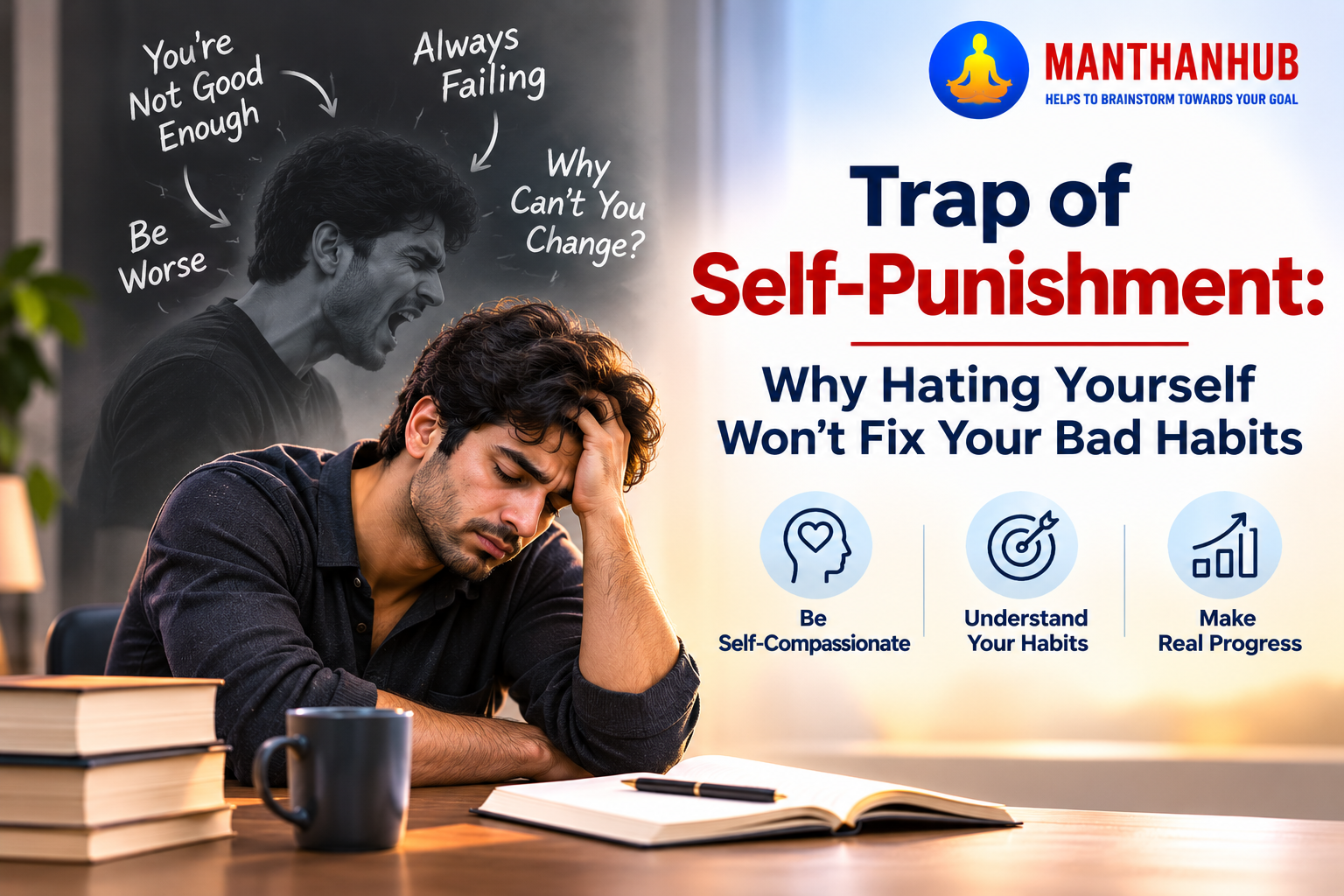
A habit that you have worked so hard trying to get rid of is broken. Perhaps you’re engaging in the same behaviours you used to: excessive Internet use, pornography, eating moods and whatever activities you want to end. You tend not to notice what is blocked but instead retaliate against yourself.
You liberate yourself, ask yourself how you feel and tell yourself that you must be feeling bad. It is a form of punishment for off-target behaviour and can cause shaming and avoidance of that behaviour, leading to further perpetuation of off-target behaviour.
It’s only natural to feel disappointed. Self-indulgence is not self-accountability! It involves introspection, identifying the specifics, and a chance to move forward again without identifying with one thing that is wrong.
Why Self-Punishment Feels Like the Right Response
Many think that if they are stricter with themselves, they won’t end up coming back to their treatment program. Their negative emotion (guilt) is what they think will help inculcate discipline, and negative criticism will help them keep the consequences. Almost anyone could say, “Control for a time.” You say bad things, make promises to limit something or say “never again.”
However, this will create positive teaching; the problem is the punishment itself. Can cause anxiety, and when the trigger returns, it has no meaning. You may be more concerned about guilty feelings than the circumstances of the behaviour, and self-punishing behaviours may be your initial response to relapsing.
How Shame Keeps Bad Habits Alive
The shame cycle of the Power of Shame and how it deals with its state of compensation. Shame is not due to the fact that the action (behaviour) was not helpful. Guilt is related primarily to an action: I did something I am sorry for. This shame becomes a habit (I must be doing something wrong).
This is significant for habit formation. Except when guilt and shame mix, you’re tempted to hide the behaviour, reject the help offered, or get discouraged and assume that no matter what you do, you’re failing.
- You experience stress, an urge, or a difficult emotion.
- You return to an old behaviour for temporary relief.
- You criticise yourself and feel ashamed.
- The shame adds more emotional pressure.
- You seek relief again, sometimes through the same behaviour.
The original trigger may remain unresolved, while the emotional aftermath creates another reason to repeat the pattern. Self-punishment after relapse can therefore become part of the cycle rather than a way out of it.
Guilt vs Accountability in Habit Change
Guilt and accountability are not interchangeable. Guilt can alert you that your actions did not match your intentions. Accountability helps you decide what to do next.
Consider the difference:
- Unhelpful guilt: I have ruined everything. I have no discipline.
- Accountability: I returned to this behaviour after a stressful evening. I need to understand what happened and change my response.
- Unhelpful punishment: I don’t deserve rest or enjoyment because I failed.
- Constructive action: I will return to my routine, address the trigger, and set a realistic boundary.
Accountability doesn’t embellish a situation, it just tells the truth. It poses these three questions: What happened? What did it do? And what needs to change? Is not about being embarrassed or self-conscious.
Recognising this difference is very important, as, in some cases, self-punishment after relapse is presented as discipline. By denying yourself the comforts you need and need to be good to yourself, telling yourself negative things over and over, or promising yourself you will be more self-controlled, you won’t necessarily be better at being self-controlled.
Emotional Effects of Self-Punishment
Understanding the consequences of psychological self-punishment is of great value in mind and conduct. Self-irritation will worsen stress and negative feelings. Consider that if you are already suffering from being overwhelmed, the constant repetition of a mistake can make it more difficult for you to focus, think or act rationally.
Not all types of wrongful behaviour are threatening to the brain, however. What is of concern is that you are having a pattern of shame and stress as your sole response to failure. This pattern can also make avoidance more attractive and impede problem-solving.
Sleep, dietary, protection or required care deprival are no longer useful habit changing tools as they become a means of self punishment after having a relapse. May be poisonous. If the person feels that the self-directed anger can’t be controlled, or if it leads to hurting himself, get professional support.
How to Stop Beating Yourself Up After Relapse
You do not need to pretend the setback did not happen. You need to respond in a way that makes a better next decision possible.
1. Describe the Behaviour Without Labelling Yourself
Use factual rather than identifying language. Think of a different version that you can use instead of “I am hopeless” (including “I felt overwhelmed but it took me 2 hours to scroll). Specific descriptions, you now have something to work with.
2. Identify the Trigger and the Need
Ask about previous events that ultimately helped to bring about the urge. If you were tired, lonely, or bored, were you anxious or frustrated or did you miss some difficult aspect of a project? Then, have a discussion with them about what kind of activity you are looking for: comforting, stimulating, escaping, connecting, or resting.
This is no excuse! Can be useful in recognising your past actions’ efforts to meet a need.
3. Choose One Immediate Repair Action
Do a little bit that brings you back down to the values. Put your cellphone away, clean up your workspace, go for a walk, message someone you know or do the next planned task. Be sure not to make grandiose commitments or make drastic cutbacks.
4. Make the Next Attempt Easier
Change the situation that encouraged the behaviour to be repeated. Try to remove as many triggers as possible, set up a screen boundary, have an alternative activity, or don’t leave long periods of unstructured time in a vulnerable timeframe.
5. Review the Setback Without Replaying It All Day
Record the trigger, behaviour, result and one change. Then move forward. Only repeated thought is a punishment, and when it is repeated in turn, it is not reflection if no change was produced.
Here are some steps you can take to practice self-compassion after failure without being irresponsible. Self-compassion is not an excuse to engage in all of the behaviors in response to the challenge. The idea is to not feel shamed and resume activities following the relapse, but to use the self-punishment as a learning opportunity.
Understand Stress and Subconscious Self-Sabotage
As people like to label it, subconscious self-sabotage psychology can be comprised of assistance that has been learned a long time ago, automatic responses and coping mechanisms. An individual can keep repeating a behaviour because it’s been associated with a specific feeling, place, or time of day.
These patterns tend to return in the context of stress and disruption of sleep, routines, and/or support. Read more about habit relapse under stress and examine the situations that make old responses more tempting.
Don’t try to be indifferent to be successful; identify the pattern you can see. What has immediately preceded the behaviour? What quick and temporary respite does it offer? What consequence follows? This gives you a good starting point for making changes.
Build a Healthier System for Long-Term Habit Change
Lasting progress comes from combining awareness with repeatable actions. Set realistic goals, track patterns without obsessing over every mistake, and build routines that can survive difficult days. When self-punishment after relapse becomes repetitive, focus on changing the response system rather than creating harsher rules.
You can strengthen your approach through the ManthanHub Brain Rewire programme, which focuses on habits, focus, and mental clarity. Explore dopamine detox strategies to reflect on digital stimulation and attention, and read Dopamine Discipline for ideas on intentional habits and self-control.
For readers addressing pornography-related patterns, books about pornography recovery and self-control may offer additional reading. You can also explore stress relief and emotional balance and ManthanHub’s personal development courses.
Conclusion: Replace Self-Punishment With a Better Way Forward
Do not expect discipline to come out of the relapse! It helps you stop focusing on guilt and shame, and it provides an opportunity to learn what or who may be contributing to it, how you can modify your surroundings to reduce it, and how you can do things differently. Failure must include some self-disclosure; it should not be you.
One may be responsible without hating oneself. Accept what has transpired, take one positive action step, and resume activities. But here is where one should remember that this is not an avoidance of responsibility, but an avoidance of self-punishment following an indubitably mistaken act that fosters others’ harmful tendencies.
Looking for information on what to do to beat the bad habits that are holding you back and how to increase self-control? Earn ManthanHub to walk a path to change in the right direction. Stop by to explore our mind-reconstructing, dopamine disciplining/personal development courses currently!
Embark on all ManthanHub Courses | Rewrite the brain for strong brain connections with the ManthanHub Brain Rewire Programme!
Explore All ManthanHub Courses | Start with the ManthanHub Brain Rewire Programme