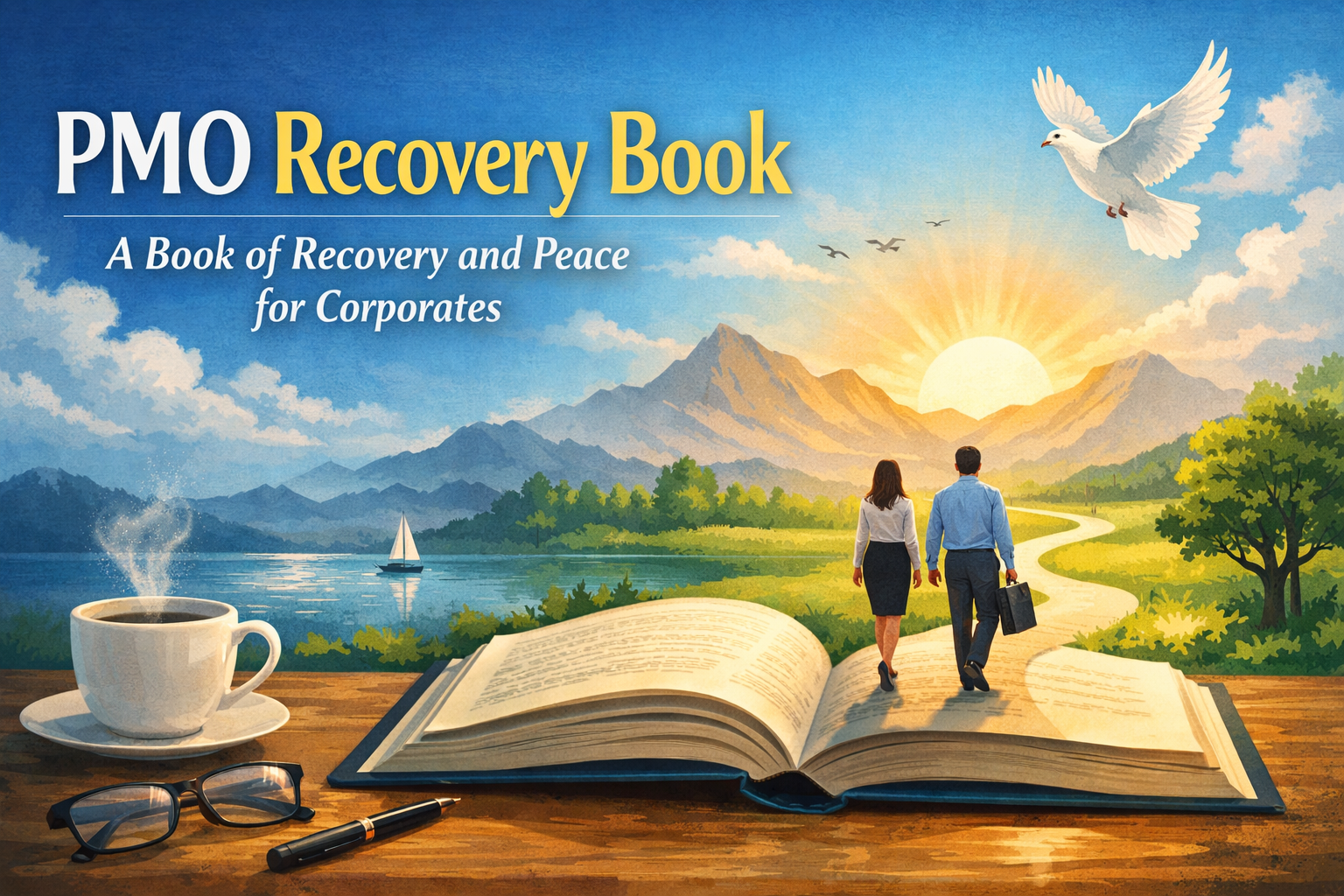
PMO Recovery Book_ A Book of Recovery and Peace for Corporates
Productivity, leadership, and performance discussions are prevalent in the corporate world. Talks on internal struggle are not. However, distraction, obsessive use of the digital world, inability to concentrate, physical burnout, and a subtle but growing inability to be disciplined, even when they know what to do, are silently managed by many professionals.
PMO Recovery is a book that is specifically written in response to this invisible crisis.
The book is not a moral lecture and pushes the subject. Instead, it introduces PMO (Porn, Masturbation, Orgasm) dependency as a conditioning issue that is induced by contemporary overstimulation and provides ways in which people, in particular, those in high-pressure workplaces, can progressively rediscover clarity, control, and tranquility. It is a performance restoration manual and a recovery guide.
Core Idea of the Book
At its heart, PMO Recovery holds that a contemporary professional is not performing poorly because they are weak. They are engulfed by an atmosphere that constantly captures their attention and rewards them.
The book explains that:
- Continuous stimulation rewires the brain toward instant gratification.
- Discipline declines not by choice but by conditioning.
- Emotional escape patterns silently replace intentional living.
- Productivity problems often originate outside the workplace—inside personal habits.
Instead of focusing on stopping the behavior, the book focuses on rewiring the system that causes it.
Why the PMO Recovery Book Is Written Specifically for Corporates
PMO Recovery, unlike general self-help books, links personal discipline and professional success. The author acknowledges the truth that many professionals can encounter:
- Long working hours increase stress and isolation.
- Digital work environments blur boundaries between focus and distraction.
- High-performance expectations coexist with declining mental stamina.
- Professionals feel “busy” but not deeply productive.
The book does not place PMO recovery as a personal problem but as a professional need to recover:
- Sustained focus
- Clear decision-making
- Emotional steadiness under pressure
- Long-term performance capability
How the PMO Recovery Book Explains the PMO Cycle
Among the most valuable aspects of PMO Recovery Book is that it breaks the PMO cycle into a clear, understandable pattern rather than an irregular habit. According to the book, the behavior of PMO is not instinctive; it is a response acquired through learning and reinforced through repetition and emotional affiliation. By learning this cycle, the reader begins to understand how it works and why their decision to quit may not always succeed.

1. The Trigger Phase: Emotional or Environmental Activation
A trigger is normally involved in the cycling. These stimuli are not often physical, but emotional or situational. The urge can be triggered by work, loneliness, fatigue, boredom or even success and the resultant relaxation. Throughout the book, it is noted that PMO is a coping strategy and is driven more by want than by intention.
2. The Escape Phase: Seeking Immediate Relief
When this is activated, the brain seeks a way of relief it knows. PMO offers a rapid transference out of pain, which is a temporary relaxation or distraction. The book brings out the role of this phase in training the mind to equate stimulation to emotional escape instead of solving the problem at hand.
3. The Reward Phase: Reinforcement of the Behavior
Following the act, the brain sends reward signals, which make one feel satisfied. This reinforcement makes the behavior and the trigger more closely associated. This relationship eventually becomes automatic, and the reaction becomes involuntary.
4. The Guilt or Fatigue Phase: Emotional Aftermath.
A large number of people regret, feel mentally exhausted, or less motivated afterwards. This emotional low rather than interrupting the cycle may actually be another stimulus that results in a repetition of the same pattern. This is what makes this a self-sustaining loop as explained in the book.
5. The Conditioning Phase: Formation of Habitual Pathways
Repeatedly, the brain starts to predict the action before the conscious thinking takes place. This is what the book refers to as conditioning wherein neural pathways become so used to that it becomes abnormally hard to resist them.
6. The Normalization Phase: Accepting the Pattern as Routine
At some point, the behavior may become common or inevitable to the individuals. Such normalization will not help with early correction and will allow the cycle to proceed unnoticed.
7. The Rewiring Opportunity: Breaking the Loop Through Awareness and Structure
The book ends this explanation by demonstrating that the brain that can create the cycle can also re-create it. With awareness, less stimulation and routine ways, the new pathways may substitute the old ones and individuals may be able to regain control slowly.
Link Between PMO and Corporate Burnout
One of the contributions that PMO Recovery makes is relating compulsive stimulation and burnout.The book describes that burnout is not always related to the workload. It is often worsened by:
- Dopamine exhaustion from overstimulation
- Reduced ability to feel satisfaction from meaningful work
- Fragmented attention that prevents deep thinking
- Emotional instability disguised as fatigue
Brain Rewiring Framework Presented in the PMO Recovery Book
Once the PMO cycle has been explained, PMO Recovery shifts to implementing its main solution: a rudimentary brain rewiring structure.
As it is stated in the book, recovery does not imply suppression and sudden resistance; it means re-training the brain over time in such a way that new patterns are created and the old ones are over.
This model is presented as a realistic, workable process that readers can adopt as they continue their daily duties in an organization, particularly in challenging corporate settings.
.1. Awareness Without Self-Blame
The initial phase is to make sense of the behavior without condemnation or criticism. The book describes how blame undermines recovery, whereas awareness fortifies it. Knowing the triggers and patterns objectively, people can become clear about how their reactions were conditioned and how they will begin to change.
2. Reducing Overstimulation to Reset Sensitivity
The second step is to consciously reduce the stimulation of high intensity. This is not presented as a severe restriction but rather to restore balance to the brain’s reward system. Natural motivation and attention begin to return as the state of overstimulation subsides.
3. Stabilizing Emotional Responses
The framework shows readers how to confront emotional pain rather than avoid it through routine. Reflection, structured pauses, and mindful routines are some of the techniques that help people tolerate stress without seeking immediate relief.
4. Replacing Old Habits With Structured Daily Actions
Instead of creating behavioral disparities, the book urges adopting simple, repeatable routines to enhance discipline. These practices are meant to reprogram the brain with consistency and over time they create a new pathway in the brain in accordance with the intentional action.
5. Rebuilding Focus Through Deep Engagement
The book brings out the aspect of having important work and activities to do and which take a long time before focusing attention. Through concentrated effort, individuals become better at concentrating and relearn satisfaction in producing rather than in being stimulated.
6. Reinforcing Change Through Repetition and Patience
The recovery process is said to be cumulative. The new pathways are reinforced by repeating healthy patterns, whereas discouragement is avoided by being patient. The framework also gives the reader hope that change comes over time through constant effort, not through a magical transformation.
7. Redirecting Energy Toward Purpose and Growth
The last process focuses on putting renewed clarity and vitality into personal and professional growth. When the brain levels off, people will be able to apply attention on objectives, connections, and significant accomplishments, which strengthen the new lifestyle.
Integration of Ancient Wisdom With Modern Life
The book is based on the traditional Brahmacharya principles, though it is interpreted in modern perspective of the book. It does give Brahmacharya not as denial but as:
- Energy regulation
- Attention conservation
- Intentional living
- Alignment between thought and action
This definition renders ancient models of discipline applicable to the modern business realities.
How the Book Addresses Emotional Health
PMO Recovery points out a number of times that compulsive behavior is in most cases, emotional rather than physical. Professionals cope with stimulation in the cases of:
- Pressure to perform
- Lack of emotional outlets
- Identity tied only to work success
- Chronic stress without recovery
The book help the reader to understand the emotional cues and develop more positive reactions, which are long-term instead of short-term.
Practical Lessons for Professionals
The book offers actionable insights that corporates can apply immediately.
Rebuilding Focus
Training the brain to tolerate deep work again.
Managing Digital Exposure
Creating boundaries that protect attention.
Developing Daily Structure
Replacing chaos with intentional routines.
Restoring Meaningful Satisfaction
Allowing achievement not stimulation to drive reward.
These lessons correspond to professional productivity and the effectiveness of the leadership directly.
Writing Style and Accessibility
PMO Recovery is written in a straightforward language. It does not use academic complexity but employs explanation, reflection and systematic thinking.This makes it accessible to:
- Executives
- Managers
- Entrepreneurs
- Young professionals
- Anyone navigating high-pressure environments
What Makes This Book Different From Other Recovery Books
The books in parentheses regarding addiction are either psychological or spiritual in nature.PMO Recovery crosses three dimensions:
- Behavioural science explanation
- Practical discipline-building methods
- Philosophical grounding in self-regulation
The combination of these makes it as applicable to personal healing as to professional growth.
Who Should Read This Book
The book is particularly useful, especially to:
- Professionals experiencing declining focus
- Individuals struggling with hidden compulsive habits
- Leaders seeking clarity and emotional balance
- People feel internally restless despite external success
- Anyone wanting structured self-mastery
The Long-Term Message of the Book
PMO Recovery does not merely convey the message of quitting a habit. It concerns regaining control of focus, vitality and purpose. It argues that:
One cannot establish any meaningful career when distracted.
A disciplined mind can restructure life and work alike.
Conclusion
PMO Recovery is not only a behavioural guide. It is a systematic guide to bring sanity to an overstimulated generation, especially to corporations where continuous concentration and emotional balance are important to performance.
The book fills a gap in the literature on workplace development by outlining the PMO cycle, offering a rewiring framework, and connecting personal discipline to professional excellence.