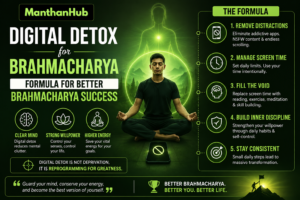
The challenge of abstaining is far more than just a matter of lacking physical desires. One of the most essential skills for anyone aiming to attain long-term self-control and break compulsive habits is learning to Avoid Triggers in Brahmacharya. In the modern digital era, people are constantly bombarded with pornography, social media, commercials, entertainment sites, and a plethora of stimulation, which silently affect our thinking, our emotions, and our actions. A significant percentage of people do not realize these triggers and end up relapsing despite the fact that they really desire to become disciplined.
The positive thing is that triggers can be learned, controlled, and mitigated step by step. By enhancing self-awareness, understanding dopamine imbalance, and building emotional resilience, one can greatly reduce the events that contribute to unhealthy thoughts and impulsive buying. It is not about being afraid of triggers but being mentally strong enough to respond to them wisely.
What Are Triggers in Brahmacharya?
We should first understand what a trigger is before learning how to handle it. Triggers are situations, emotions, environments, thoughts, or experiences that make someone more likely to engage in unhealthy behavior. They tend to stimulate previous habits unconsciously, particularly in those cases where the brain has been trained throughout years of pornography watching or instant gratification. Recognizing triggers early is the first step in learning to Avoid Triggers in brahmacharya.
External Triggers Influence Your Environment
External stimuli include social media content, direct advertisements, movies, web pages, discussions, or digital portals that bring the mind into unwarranted stimulation. These triggers are not necessarily harmful, but by being repeatedly experienced, these triggers can affect thoughts, as well as increase the chances of relapse.
Internal Triggers Begin Inside the Mind
Not all stimuli are external. Unhealthy behaviors and thoughts can be induced by stress, loneliness, boredom, frustration, anxiety, sadness, or even overconfidence. Understanding these emotional patterns is critical, since internal triggers tend to lead to more relapses than external triggers.
Triggers Become Stronger Through Repetition
When the same stimulus causes the same behavior, the brain develops strong neural connections. Over time, even simple scenarios like being alone, feeling stressed, or using a smartphone can automatically trigger unhealthy thought patterns. This is why trigger identification is a key step toward lasting recovery.
Why Avoiding Triggers Is Important for Brahmacharya
Resisting urges is often harder than prevention, as many people tend to concentrate on resisting them when they are visible, whereas preventing the urges is usually easier. Breathing trigger-avoidance strategies in brahmacharya reduce the circumstances that undermine your discipline and help the brain recover more effectively, mitigating the impact of overstimulation over several years.
Fewer Triggers Mean Better Self-Control
Any trigger you prevent is a battle the mind doesn’t need to fight. Avoiding unwarranted exposure to stimulating content will enable the brain to be in a calmer state and disciplined decisions will become significantly easier during the day.
Trigger Management Supports Brain Rewiring
The brain will start forming healthier neural pathways each time you react differently to an old trigger. Over time, these new patterns undermine compulsive tendencies and reinforce self-control.
Emotional Stability Improves Recovery
Once the emotional triggers have been recognized and addressed appropriately, people have a decreased chance of considering unhealthy practices as transient solutions. This creates a stronger foundation for lasting Brahmacharya success.
Better Awareness Prevents Relapse
Many relapses occur because people miss early warning signals. By learning to recognize circumstances that make one more prone to temptation, one can limit such behavior and avoid developing unhealthy habits before reasoning itself becomes unhealthy.
Practical Ways to Avoid Triggers in Brahmacharya
Learning to Avoid Triggers in Brahmacharya is a success, and it does not imply that you have to isolate yourself in the world. Rather, it is the process of establishing healthier habits, environments, and routines that minimize unnecessary temptation and enhance mental discipline.
Remove Pornography and Explicit Digital Content
The greatest measure is the eradication of easy access to pornography and other explicit material. Unfollow interesting profiles, block inappropriate sites, and delete online materials that constantly trigger unhealthy thoughts. By creating a purer digital environment, one can reduce unwarranted temptation.
Limit Social Media and Short-Form Content
Numerous social media platforms constantly bombard users with content meant to capture attention and elicit emotion. By spending fewer hours scrolling through reels, short videos, and entertainment feeds, people will be less distracted, and their minds will have a chance to rest after constant dopamine stimulation.
Avoid Being Alone Without Purpose
Most relapses happen when people spend a lot of time alone with nothing significant to occupy their time. A well-thought-out daily routine of useful labor, activity, study, hobbies, and self-improvement reduces stress and boredom and lowers the likelihood of unhealthy habits.
Identify Your Personal Trigger Patterns
Each person’s recovery process varies. Some individuals find it harder during times of stress, while others revert because of boredom, isolation, or spending too much time on screens. A journal and habit observation help you understand your personal triggers and control them better in the future.
More Practical Ways to Avoid Triggers in Brahmacharya
Avoiding triggers does not mean living in fear or avoiding society. It is all about creating a life in which your environment is weaker than your mind. The more discipline you have, the less and less you need to be stimulated in order to continue to practice long-term Brahmacharya. These are just some of the strategies that can further assist you Avoid Triggers in Brahmacharya and support you on the recovery journey.
Practice Meditation and Improve Self-Awareness
Eating meditation will help you notice thoughts without necessarily acting on them. Meditation then provides a mental break in which you can make explicit decisions, rather than being dictated by a trigger. Emotional regulation, along with less impulsive behavior from daily mindfulness practice, has made it easier to manage inner and outer triggers.
Exercise to Redirect Your Energy
Exercise also helps balance dopamine, relieves stress, and supports mental health. Exercise also helps channel energy and emotion into constructive activities, thereby minimizing the chances of compulsive behavior. People who exercise regularly and maintain a certain fitness level tend to find preventive states easier in brahmacharya, as they become more disciplined and form healthy habits.
Build a Strong Morning and Night Routine
How you live and your day-to-day practices matter for your mind. Meditating at the beginning of the day, doing a workout, reading, and planning brings about a disciplined thought process, and not using digital devices before going to sleep enhances the quality of sleep and minimizes idle stimulation. Formalized schedules reduce boredom and negative attitudes.
Stay Connected with Positive People
The individuals who surround you may affect you in terms of thinking, habits, and motivation. Spending time with disciplined, growth-oriented people can encourage healthy behavior and remind you of your future ambitions. Good discussions and positive relationships also help discourage loneliness, which can be an emotional trigger.
Common Mistakes While Managing Triggers
Most people sincerely desire to change, but they are unaware of the fact that they are obsessing with actions that tend to lead to relapse. Understanding these common errors helps you develop a better plan to avoid triggers in Brahmacharya, with the aim of helping the person recover in the long term.
Believing Willpower Alone Is Enough
Many individuals believe they can overcome all temptations through resolve alone. But the continuous struggle against needless fights soon exhausts the mind. It is much more productive to reduce exposure to triggers than to rely on willpower over and over again.
Continuing High-Dopamine Activities
Others quit pornography but spend hours on reels, binge-watching videos, playing games, or scrolling social media endlessly. These activities keep the brain reliant on constant stimulation and make it harder to resist urges over time.
Ignoring Emotional Triggers
More relapses than outside content are often caused by stress, loneliness, frustration, boredom, anxiety, and sadness. By disregarding emotional patterns, one allows unhealthy coping patterns to persist. To find a permanent solution, it is imperative to learn more positive ways to manage emotions.
Returning to Old Environments Too Soon
After a few weeks, many have regained their confidence and start browsing the same sites, social media profiles, or spaces where they had initiated unhealthy behaviors. This can easily lead to unnecessary disappointment unless one has a disciplined mind.
Living Without a Clear Purpose
Entertainment and instant satisfaction are natural to find in a mind with no significant aims. Nurturing a purpose-oriented lifestyle, including learning, working out, career advancement, spirituality, and self-improvement, will minimize the impact of unhealthy triggers.
How Books Help You Avoid Triggers in Brahmacharya
Books provide practical knowledge that helps individuals understand how triggers develop and how to manage them effectively. Reading daily also keeps the mind focused on growth, discipline, and recovery instead of temporary pleasure.
Dopamine Discipline Explains Trigger Management
Dopamine discipline describes the ways in which dopamine addiction causes persuasive thought, emotional catalysts, and judgments. It offers effective techniques of overstimulation and magnifying self-control, employing disciplined daily routines.
The Superhuman Lifestyle Builds Strong Mental Discipline
The Superhuman Lifestyle helps readers build confidence, emotional strength, meaning in their lives, and lifelong Brahmanacharya discipline. These qualities help people respond to triggers wisely rather than react on impulse.
Dopamine is Destroying Your Life and Creates Digital Awareness
Most triggers result from overstimulation by digital stimuli. This book helps readers see how technology, social media, and instant gratification silently affect the brain, and it offers practical tips for reducing the excessive lure.
Eternal Bond Supports Emotional Healing
People may be driven by emotional trauma. Eternal Bond promotes healthier relationships, emotional maturity, and greater self-awareness, helping individuals reduce the emotional dynamics that can lead to relapse.
How ManthanHub Helps You Avoid Triggers in Brahmacharya
It is much easier to learn to Avoid Triggers in Brahmacharya successfully with practical guidance than to cope with everything independently. The ManthanHub offers organized recovery programs that can guide people towards discipline, enhancing emotional stability, reducing dopamine addiction, and developing a long-term pattern of Brahmacharya.
Under the guidance of Radheshyam More, individuals receive support through:
PMO Recovery Programs
PMO Recovery Programs help identify personal triggers, reduce relapse risk, and build practical habits that support long-term recovery.
Dopamine Discipline Systems
Practical methods help individuals reduce overstimulation, improve focus, and strengthen self-control by correcting unhealthy dopamine patterns.
Brain Rewiring Techniques
Daily implementation strategies replace unhealthy neural pathways with disciplined habits that support lifelong Brahmacharya.
Personal Recovery Sessions
Individual mentoring provides personalized guidance, accountability, emotional support, and practical solutions tailored to each person’s recovery journey.
Books and Learning Resources
Transformational books and educational resources provide continuous motivation and practical knowledge that strengthen self-awareness and help individuals manage triggers more effectively.
Results You Can Expect After Learning to Avoid Triggers
When individuals consistently learn to Avoid Triggers in brahmacharya, recovery becomes much more stable and sustainable. Rather than constantly fighting temptations, they gradually build a lifestyle where healthy habits naturally replace unhealthy behaviors.
Better Self-Control
Reducing unnecessary triggers allows the brain to make healthier decisions without constantly struggling against impulsive thoughts.
Reduced Urges and Relapses
As exposure to triggers decreases and healthier routines become stronger, compulsive urges often become less frequent and easier to manage.
Improved Emotional Stability
Learning healthier emotional coping strategies helps reduce stress, anxiety, loneliness, and frustration while improving overall mental well-being.
Greater Focus and Productivity
A calmer mind with fewer distractions can concentrate better on studies, work, fitness, relationships, and personal development.
Stronger Long-Term Brahmacharya Success
The greatest benefit is creating a disciplined lifestyle where self-control becomes natural, allowing individuals to maintain Brahmacharya with greater confidence and consistency.
Conclusion
One of the most effective ways to achieve sustainable self-control and personal transformation is to learn to Avoid Triggers in brahmacharya. Rather than relying solely on sheer determination, successful recovery depends on getting to know your triggers, minimizing unnecessary stimulation, building emotional resilience through understanding them, and developing discipline in everyday life. As your brain slowly rewires itself around more beneficial habits, Brahmacharya becomes less of a challenge and more of a lifestyle.
In case you would like to jot down expert advice over the course of this adventure, ManthanHub provides full PMO recovery frameworks, dopamine discipline regimes, brain rewiring solutions, one-to-one tutoring, and transformational booklets produced by Radheshyam More.
One can use resources such as Dopamine Discipline, The Superhuman Lifestyle, Dopamine is Destroying Your Life, and Eternal Bond to reduce triggers, build discipline, improve emotional stability, and establish a sustainable Brahmacharya lifestyle based on self-mastery over time.