


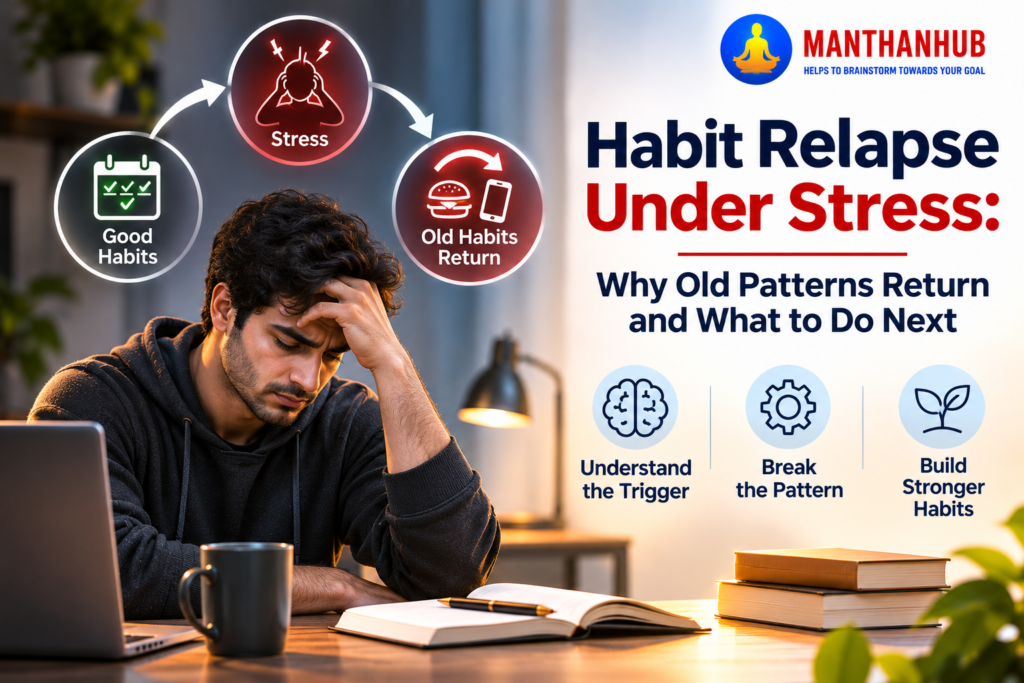
You have been making attempts to develop good habits. You might not be spending as much time on the screen, working into a routine exercise regimen, changing your daily routine, or quitting something that bothered you. Soon comes a week of worry. Work pressure, sleep disturbances and obligations start taking a toll. You return to the ways that you believed you had forgotten!
This is a common experience during habit change. Habit relapse under stress can feel discouraging, especially when you have already invested time and effort in building healthier routines. However, returning to an old behaviour does not automatically erase your progress. It signals that your current strategies may need adjustment.
Understanding why this happens can help you respond more effectively, recover your routine, and build resilience after setbacks.
Why Do Old Habits Return During Stress?
Habits are actions that become easier by doing them over and by using the same cues. Some situations, emotions, places or times of the day may start to create automatic responses over time.
These patterns can be more inviting during stressful times. When you’re feeling overwhelmed, that can make you less patient with tasks that require planning and follow-through. Common activities are often the fastest way to feel comfortable, distracted, or temporarily better.
This explains why old Habit Relapse Under Stress is not necessarily a sign that you have lost your discipline. This can mean it’s easier for familiar responses to come to mind when you’re thinking and feeling.
For example:
- You start scrolling social media whenever work becomes difficult.
- You return to late-night screen use when you feel lonely or anxious.
- You skip exercise because your schedule feels overwhelming.
- You turn to emotional eating when dealing with frustration.
- You postpone important tasks because avoiding them offers temporary relief.
The behaviour may provide short-term comfort, but it can create additional problems when repeated without awareness.
5 Reasons Stress Can Trigger Old Patterns
1. Stress Reduces Your Capacity for Deliberate Decisions
If there are multiple issues to address, it is draining to make choices during a day. Alternatively, familiar behaviours might be chosen because they are less demanding at the time.
You may skip an unpleasant task or automatically grab your cellphone as a way to avoid following a pre-established plan for your evenings.
2. Familiar Behaviours Offer Immediate Relief
Many of us have habits we cannot stop ourselves from doing, and we are rewarded for them in the short term. Going through ‘check-ins,’ surfing forever or doing something you don’t want to do again will briefly stop you from engaging with the challenging feelings.
The original problem does not necessarily get solved by the relief. It can just encourage the behaviour to recur. This is why, over time, stress and compulsive habits can be correlated.
3. Your Environment Still Contains Old Triggers
A stressful situation is not always the only trigger. Your work environment may also prompt known responses.
For instance, leaving your phone next to your bed makes it easier to get to it; having more distracting tabs or web pages open while you are working can bring you back to it more quickly; and being in a venue where you have an unwanted habit can increase your likelihood of returning to it.
4. You Depend Too Much on Motivation
Motivation varies depending on the situation. Something that was possible when you were feeling good might not be so easy when you’re feeling tired, worried or busier.
Relying solely on motivation to exercise isn’t enough to sustain the addiction.
5. One Setback Turns Into an All-or-Nothing Reaction
When one workout is missed or doesn’t produce the hoped-for benefits, or one reverts to an unintended behaviour, it can be easy to become disheartened and believe all progress is lost.
Such thinking can become a vicious cycle: failure leads to guilt, guilt causes anger, and anger leads to repeat failures.
Setbacks in changing habits can be more harmful if you believe you have inevitably failed rather than seeing them as valuable feedback.
What to Do Immediately After a Habit Relapse
Habit relapse under stress requires a response based on awareness and action, not self-punishment. The goal is to interrupt the cycle and return to a manageable routine.
1. Stop the Guilt Cycle
Avoid spending hours berating yourself for what transpired. Guilt can distract you from the setback instead of helping you learn from it.
Be honest about the behaviour. Don’t make excuses, but don’t let one decision define you.
Reflect and ask yourself: What went wrong, and what can I do to make it work out differently next time?
2. Identify the Trigger
Look at the circumstances before the behaviour occurred.
Consider:
- What was I feeling?
- Was I tired, frustrated, lonely, or overwhelmed?
- What was happening around me?
- What time of day did it happen?
- Was I avoiding a particular task or emotion?
Identifying the trigger helps you prepare a different response. Without this step, you may keep trying to control the behaviour while ignoring the conditions that encourage it.
3. Restart With a Smaller Version of the Habit
Don’t require a hard exercise session every day when you start again after two weeks. Pick a short walk or an easy session to get started.
If you’ve fallen out of the habit of reading, start with 5 pages, rather than trying to read a chapter.
Restarting a habit requires modifying it to make it easier until you can be consistent again.
4. Change the Environment
Make undesirable behaviours more difficult, while making desirable behaviours easier.
Include no cell phones out during concentration, eliminate unimportant alerts, plan your exercise clothes ahead of time, or create a special area for reading.
When stress rises, you can reduce how many decisions you must make by making small changes to the environment.
5. Prepare an Alternative Response
Do not rely only on resisting an urge. Decide what you will do instead.
For example:
- When you feel overwhelmed, take a short break and write down your next task.
- When you want to scroll, put your phone away and walk for five minutes.
- When you feel restless, practise slow breathing or another calming activity.
- When you want to avoid a difficult task, work on it for just ten minutes.
Coping with urges and stress becomes more manageable when you have a specific alternative ready.
How to Prevent Future Setbacks
Habit relapse under stress can become less frequent when your routine is designed for difficult days, not just ideal conditions.
Build a Minimum Routine
Make the scale smaller for each key habit. On a busy day, you can do a 10-minute workout, read a page of a book, or do a focused work session.
A basic procedure to safeguard continuity without asking for impossible performances.
Recognise High-Risk Situations
Be aware of the times during the day and the week that your old patterns may be activated. It may be after a stressful meeting, late at night, during times of isolation, or when multiple deadlines fall on one another.
Write ahead of time what to do in these situations.
Practise Emotional Awareness
Don’t have to respond to all the discomfort right away. Take a timeout and check in with yourself before taking action.
Exercises such as journaling, mindfulness, walking, and breathing can help create a gap between an urge and your response. They are not quick fixes, but techniques to learn.
Review Your Progress Weekly
Instead of judging yourself by perfect consistency, review what worked and what caused difficulty.
Ask three questions:
- Which habits did I maintain?
- What situations disrupted my routine?
- What adjustment would make next week easier?
This approach helps you build resilience after setbacks rather than repeatedly starting from zero.
Rebuild Your Habits With a Better System
Long-term habit improvement requires more than willpower. It involves understanding triggers, changing routines, managing attention, and developing responses that work under pressure.
ManthanHub provides educational resources that can support this process. Explore the ManthanHub Brain Rewire framework to understand structured approaches to behaviour change, or practise relevant brain rewiring exercises.
You can also explore stress relief and emotional balance resources, mind-body and emotional recovery resources, and the Dopamine Detox Mental Freedom course.
For additional learning, visit all ManthanHub courses and explore the Dopamine Discipline book guide. These resources offer educational perspectives on attention, discipline, and personal development. They are not substitutes for professional mental health care.
When Should You Seek Additional Support?
If a repeated behaviour is seriously affecting your health, relationships, finances, work, or daily functioning, consider seeking support from a qualified professional. Persistent compulsive behaviours, severe distress, or difficulty controlling urges may require individual assessment rather than another self-improvement routine.
Getting support is a practical step, not a failure of discipline.
Conclusion
If you fall back into Habit Relapse Under Stress, it doesn’t mean your efforts were worthless! It indicates that what works well during an easy period might not work during a more difficult one. Don’t beat yourself up, instead, take notice of your triggers, reset your routine with smaller acts, and find ways to deal with triggers and urges in a healthier way.
You don’t have to go through this alone. ManthanHub provides learning materials on brain rewiring, dopamine discipline, emotional balance, and personal transformation to help you better understand your behaviours and change them for good.
Are you prepared to make a change in your life and have more self-discipline? Join the personal transformation journey today by exploring ManthanHub’s courses.