
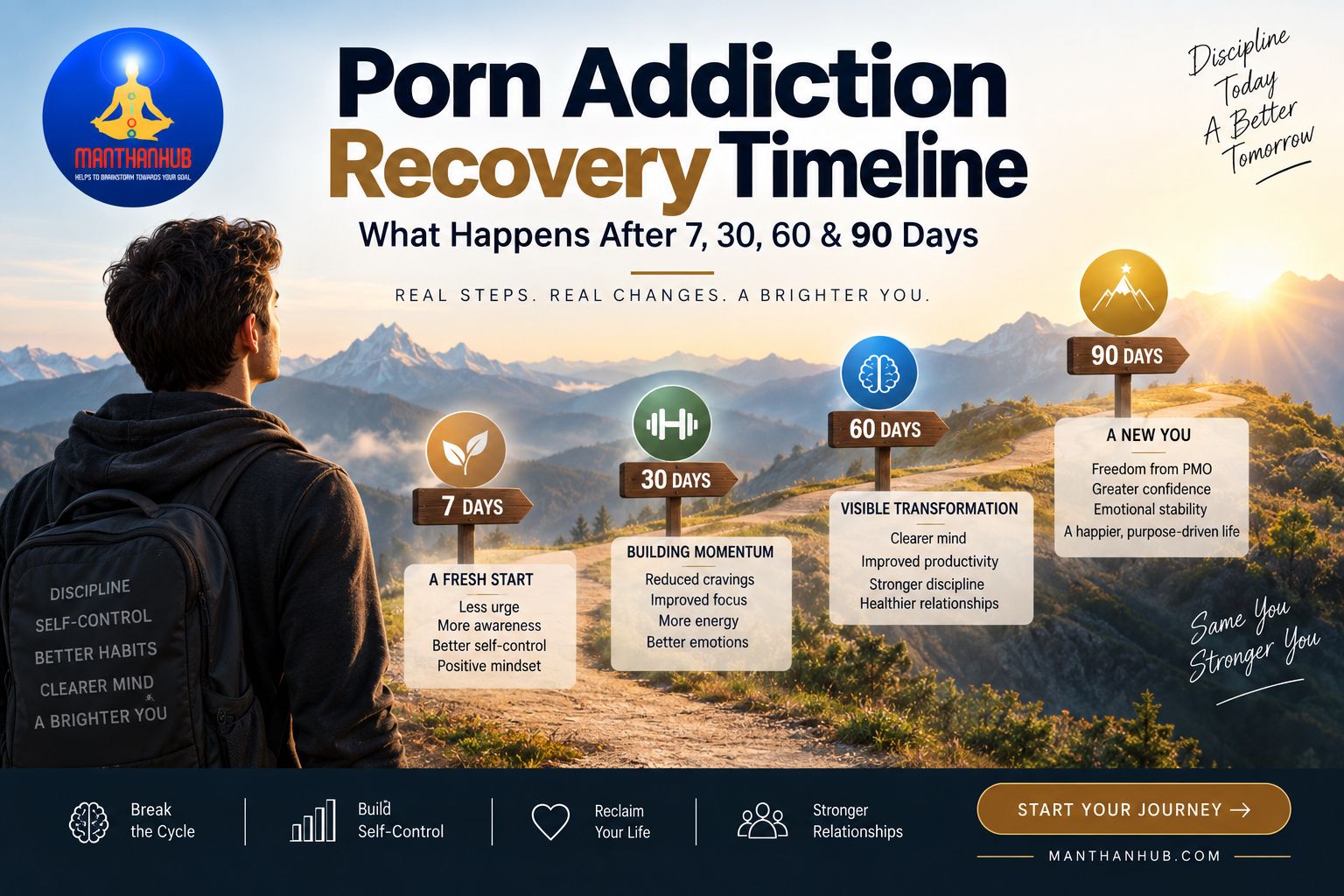
Stopping pornography may seem confusing, as the process of recovery is not always perfectly predictable. The porn addiction recovery timeline varies with each individual based on the frequency and duration of pornography consumption, specific triggers, pattern of emotions, environment, and the transformations undergone in the recovery process. Some individuals may feel positive changes quickly, while others may continue to feel urges or experience setbacks even after months.
That is why 7, 30, 60, and 90 days are not biological milestones but useful checkpoints. Recovery isn’t just about keeping a streak. It means learning to respond to triggers, change compulsive behaviours, build healthier coping skills, and regain control over your behaviour.
Knowing what can happen at different stages of the Porn Addiction Recovery Timeline can help you set realistic expectations and focus on long-term progress.
Is There a Fixed Porn Addiction Recovery Timeline?
No scientifically set schedule claims that the porn addiction recovery timeline is within 30, 60, or 90 days. Recovery is personal, and what counts as recovery may vary. A person can quit porn relatively fast but continue to have difficulties with urges, emotional stimuli, or obsessive thoughts.
An effective porn addiction recovery plan thus counts days of abstinence. Examine behavioural changes, trigger management, emotions, routine, relationships, productivity, and responses to different urges.
The 90-day idea is popular and can help you get organised, but it shouldn’t be treated as a brain reset. Aim for long-term behavioural change rather than hitting a certain date on the calendar.
What Happens During the First 7 Days Without Porn?
The first week is usually the one characterised by disruptions to common routines. Assuming that pornography has become tied to certain times, feelings, equipment, or circumstances, when it is taken away, the patterns become more pronounced.
Urges and Triggers May Feel More Noticeable
The first few days will be spent being more conscious of circumstances that will trigger pornography in your mind. Urges may be caused by being alone, staying up late, boredom, stress, social media, or specific emotional states.
Rather than panicking when an urge comes, find out what just came right before the urge. This starts the process of knowing your porn addiction triggers as opposed to repetitively responding to them.
Breaking the Existing PMO Routine
For someone in PMO recovery, the first week may involve breaking automatic patterns. You can interrupt unhealthy behaviour by changing nighttime habits, eliminating explicit content, reducing time on triggering social media platforms, and keeping devices out of personal areas.
Emotional Discomfort Can Surface
There are those who have turned to pornography to get out of boredom, loneliness, frustration, stress, or other unpleasant feelings. When the behaviour stops, those emotions can become more prominent.
This does not necessarily indicate failure to recover. It can reveal areas that need healthier coping mechanisms.
What Happens After 30 Days Without Porn?
The 30 days without porn may be a significant psychological milestone, but what is important is what has changed in the thirty days. Just avoiding pornography and leaving all the rest of the unhealthy habits intact cripples the results you can achieve.
Greater Awareness of Your Triggers
Patterns may become more apparent after several weeks of conscious observation of your behavior. You might notice that urges are more common after stress, overscrolling, loneliness, sleeplessness, or specific online behaviors.
This awareness matters because you can prepare in advance for predictable triggers rather than getting caught off guard.
Building New Responses to Urges
Replace the old response with something healthier to strengthen recovery. You can break a habit loop by exercising, walking, calling someone, changing the environment, journaling, meditating, or starting a productive activity.
It is not aimed at getting rid of all sexual thoughts. It is to establish more mastery over the response.
Focus Starts Shifting Toward Healthier Activities
With fewer hours devoted to pornography, it is possible to spend time on fitness, work, and studies, relationships, hobbies, or personal development.
This replacement matters. Eradicating a single behaviour without replacing it with something of substance may leave boredom and emotional stimuli intact.
What Happens After 60 Days Without Porn?
Someone who has steadily developed habits of changing their routines might find that healthier behaviours become more habitual at a point of about 60 days without porn. But it does not imply that triggers are eliminated and relapse is impossible.
New Habits Can Become More Established
Workouts, organised mornings, less social media time, better sleep, and effective routines can start to feel less compulsory when you practice them regularly.
Such behavioural changes are more significant than merely saying you have done sixty days.
Better Emotional Regulation Can Develop
Provided you have strived to develop emotional coping skills, stressful situations can be approached more easily without entering into pornography immediately.
This should be a significant component of porn addiction treatment since, in the long run, the individual needs to treat the underlying causes of the behavior by not just preventing access to the content.
Confidence Can Increase Without Becoming Overconfidence
Development can build self-assurance in your ability to make good decisions. Nevertheless, this step may also lead to a dangerous thought: I am cured, and a single slip won’t count.
You don’t need to intentionally challenge yourself with old triggers. Recovery doesn’t require proving you are no longer affected by temptation.
What Happens After 90 Days Without Porn?
The 90-day porn addiction recovery timeline is widely covered on the internet. Finishing 90 days can be a significant milestone, but it should be seen as a milestone, not an endpoint.
Recovery Routines Can Become Stronger
After about three months of steady behaviour change, routines around sleep, exercise, technology use, work, and trigger management can be much stronger than they were on Day One.
It all depends on consistency. Ninety days of failed abstinence is not equal to ninety days of active rehabilitating.
Managing Triggers Can Become Easier
When you repeatedly identify a trigger and choose an alternative response, you build your capacity to cope with challenging situations. Urges can still come, but you can be prepared to respond better and not necessarily return to old behavior.
It is here that brain rewiring in porn addiction should be taken into consideration. Neuroplasticity enables the brain to adapt to experience and repeated behaviour, but there is no common 90-day reset button that allows the brain to start all over.
Recovery Moves Beyond Counting Days
One of the most important shifts is moving from
How many days have I completed?
to:
What kind of life am I building?
Long-term recovery must ultimately be less about keeping a streak; it must be about being able to live without the pornography dictating your habits, feelings, or choices.
What Can Slow Down Your Porn Addiction Recovery Timeline?
Two people can stop pornography on the same day and have completely different experiences. The habits, environment, emotional health, support system, and reaction to setbacks can be used to determine your porn addiction recovery timeline.
Repeated Exposure to Triggers
The unnecessary complexity of recovery can be imposed by deliberately continuing to engage in sexually stimulating or personally triggering material. Organising your digital space minimizes needless exposure.
Depending Only on Willpower
Willpower fails to work when you are fatigued, stressed, lonely, or emotionally drained. Other mechanisms, like website restriction, regular routines, responsibility, and programmed reactions to triggers, offer further safeguards.
Replacing Porn With Other Compulsive Digital Habits
Real-time gaming or mindless scrolling can only substitute one compulsive stimulation for another. Establishing a healthier relationship with technology can support broader behavior change.
Ignoring Emotional Triggers
If pornography has become a pattern of coping with loneliness, stress, rejection, anxiety, or other troubling situations, the patterns behind it are worth consideration. In the case of chronic distress or compulsive behavior, it may be suitable to seek the help of a qualified mental health professional.
Does a Relapse Reset Your Entire Recovery Timeline?
Even a relapse into a porn addiction does not remove all that you learned and all the healthy practices that you acquired. Still, pretending that relapse is inconsequential is not helpful.
Examine what happened. What was the precipitating factor? What were the decisions leading to the relapse? Which protective routine disappeared? What must be different the next time the same situation is experienced?
Rather than throwing yourself back to Day One with obsessive attempts, make the setback informational. Porn relapse recovery aims to break the cycle at an early stage and learn to avoid it and ensure that a single episode does not become a relapse to a lifelong compulsive behavior.
How ManthanHub Supports Porn Addiction Recovery
To recover permanently, it helps to understand the timeline and take action. ManthanHub attends to the recovery of porn addiction by advising on what triggers it, self-control, altering bad habits, and adopting a more disciplined life.
Radheshyam More’s books and recovery materials address PMO recovery, dopamine discipline, behavior change, emotional patterns, and practical strategies to re-establish daily routines. ManthanHub may also offer personal sessions and programs for people seeking greater organization and responsibility.
The aim is not to ensure a similar recovery time for everyone. It is to help people learn their patterns and develop viable systems they can continue after 30, 60, or 90 days.
Conclusion
The porn addiction recovery process does not follow the countdown till the D-Day when all urges will have disappeared. You can do this in seven days to identify your patterns. One month can help you develop other responses. 60 days can reinforce more healthful habits. A 90-day period may mark significant behavior change. However, none of these milestones can ensure full recovery.
Long-term change comes from what you do over and over again on those days.
When you are sick of counting streaks, ManthanHub can help you move past the habit and focus on the dynamics behind the behavior. By utilizing Radheshyam More PMO recovery resources, books, structured programs, and personal guidance, you can build a pragmatic recovery system centered on triggers, habits, self-control, and sustainable change.
Recovery should ultimately mean more than staying away from pornography. It must consist of the achievement of the state of no longer living by fighting it.
FAQs
What is the recovery time of porn addiction?
No standard recovery time. The schedule depends on the behavior, trigger, emotional patterns, environment, support, and consistency with healthier behavior.
What happens after 30 days without porn?
Thirty days is often enough to recognise triggers, disrupt usual patterns, and start responding in healthier ways. Experiences vary widely from person to person.
Can you get rid of porn addiction in 90 days?
Not necessarily. Sixty days may work well as a milestone, but it’s not a scientific guarantee of recovery. Behaviour change over time matters more than hitting a specific day.
Does the brain recover after quitting porn?
The brain can change through neuroplasticity and experience. Nevertheless, the assertions that all brains totally reset after a specific number of days without porn are simplistic when it comes to neuroscience.
Does relapse restart the porn addiction recovery timeline?
A relapse does not erase previous learning or healthy changes. Find out what made it happen, fix it in your plan to get back on track, and get back to healthy behaviour instead of letting a single slip turn into a long-term relapse.