


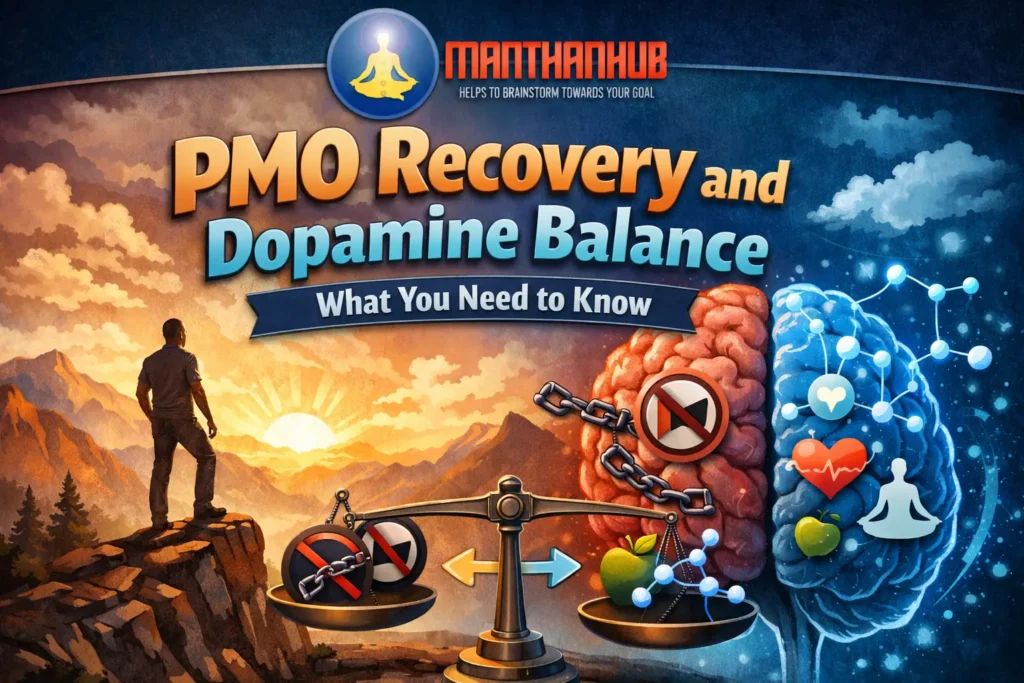
PMO recovery and dopamine balance are kept in a close relationship, but the vast majority of individuals who attempt to quit porn addiction, masturbation, or compulsive sexual behavior never approach the relation appropriately. Some use discipline, streak counting, or forceful control, and the actual problem continues to increase within the brain. Dopamine is the motivating, rewarding, attention-seeking, and desiring factor. Dopamine is continuously overstimulated by PMO, and the more the brain becomes used to the high-intensity stimulation, the more it begins to lose its ability to feel calm, motivated or even satisfied without it.
That is why a lot of people in Porn Addiction Recovery turn out to be uncomfortable, depressed, empty, or mentally dull despite reducing. It reflects a disrupted reward system. Learning how dopamine functions, how PMO damages balance, and how stability returns forms the base of long-term PMO recovery. Without this clarity, recovery feels like pressure. With it, recovery turns into alignment.
Understanding Dopamine Beyond Pleasure
Before moving deeper, one belief needs correction. Dopamine is not just a pleasure signal. It works mainly as a driver of motivation and expectation.
Dopamine:
- pushes desire and action
- strengthens habits
- decides what the brain labels as important
- affects focus, energy, and follow-through
When dopamine stays balanced, effort feels meaningful and focus flows easily. When overstimulation takes over, the brain chases intensity instead of purpose.
PMO targets this system directly.
How PMO Disrupts Dopamine Balance?
PMO creates frequent and intense dopamine spikes within short periods. Over time, the brain adjusts to this overload.
What happens inside:
- dopamine receptors lose sensitivity
- everyday tasks feel dull
- motivation fades
- emotional numbness grows
- focus becomes unreliable
The brain starts asking for stronger input just to feel normal. This explains why urges rise even as satisfaction drops. At this stage, it is no longer pleasure. It is dependence.
PMO recovery breaks down when behavior stops, but chemical imbalance stays untreated.
Why PMO Recovery Feels Harder Than Expected?
Many believe that stopping PMO will instantly restore energy and clarity. When that does not happen, disappointment follows.
This occurs because:
- dopamine does not rebalance quickly
- the nervous system remains overstimulated
- emotional control stays weak
- stress patterns remain active
PMO recovery is null and weary without the regulation of dopamine. This mostly results into relapse, guilt and uncertainty.
Recovery works best when internal balance reduces urge intensity instead of fighting urges nonstop.

The Dopamine–Emotion Connection in PMO Recovery
Dopamine imbalance always links with emotional instability.
When dopamine stays unstable:
- stress feels heavy
- boredom feels unbearable
- loneliness feels intense
- anxiety rises
- emotional control breaks down
PMO then becomes emotional escape rather than pleasure. This is why emotional repair matters as much as behavioral change.
Ignoring emotions while pushing discipline leads to exhaustion. Healing emotions supports dopamine balance naturally.
Early Signs Your Dopamine System Is Imbalanced
Many people misread chemical symptoms as personal failure.
Common signs include:
- trouble focusing on simple work
- constant need for distraction
- low drive despite clear goals
- restlessness without cause
- emotional flatness
- poor sleep
- compulsive scrolling or stimulation chasing
These are not flaws in character. They signal dopamine overload.
Recognition removes shame and opens the door to strategy.
How Dopamine Balance Supports PMO Recovery
As dopamine stabilizes:
- urges weaken
- focus sharpens
- emotions calm
- discipline feels lighter
- motivation steadies
This explains why effective recovery systems emphasize regulation rather than suppression.
Balanced dopamine brings:
- reduced craving
- clearer thinking
- calmer nervous system
- stable self-control
PMO recovery becomes a result of balance, not constant effort.
The Role of Nervous System Regulation
Dopamine cannot recover inside a stressed nervous system.
An overstimulated system:
- magnifies urges
- increases impulsive action
- weakens control
- disturbs sleep
This is why calming practices like breathing routines, sound-based healing, rest cycles, and structure matter deeply in PMO recovery.
Calm always comes before control.
Why Willpower Alone Doesn’t Fix Dopamine Damage
Willpower works at a conscious level. Dopamine patterns sit mostly below awareness.
This gap causes:
- short streaks
- repeated relapse
- emotional burnout
- inner conflict
Long-term recovery needs retraining subconscious systems, including:
- habit rebuilding
- emotional processing
- reward system reset
Willpower starts change. It does not sustain it alone.
Healthy Dopamine vs Artificial Dopamine
PMO produces artificial dopamine surges without effort or growth.
Healthy dopamine comes from:
- progress
- effort-based reward
- clarity
- emotional connection
- discipline
- purpose
PMO recovery does not remove dopamine. It teaches the brain to value healthy sources again.
This shift needs time, structure, and patience, and it works.
Why Time and Structure Matter in Dopamine Recovery?
The brain adapts through repetition, not intention.
Dopamine balance improves when:
- routines stay consistent
- stimulation reduces gradually
- emotions process safely
- habits replace old ones
- identity strengthens
This explains why short detox attempts fail while longer guided programs succeed. Recovery stays a process, not a moment.
Common Mistakes People Make During PMO Recovery
Many setbacks happen due to poor dopamine understanding.
Common errors include:
- extreme restriction
- expecting quick motivation
- neglecting emotions
- swapping PMO for other compulsions
- isolating instead of stabilizing
These mistakes keep dopamine unstable and recovery weak.
Balanced recovery feels steady, not harsh.
What Sustainable PMO Recovery Actually Looks Like
As dopamine balance returns, recovery changes tone.
You may notice:
- quieter urges
- more mental space
- stronger emotional control
- deeper sleep
- renewed interest in life
- steady focus
This reflects alignment, not perfection.
PMO fades from focus because the brain no longer demands it.
How Long Does Dopamine Balance Take to Restore?
No fixed timeline exists, but many notice:
- early relief within weeks
- gradual emotional stability
- steady urge reduction
- improving focus over time
Consistency matters more than speed.
Recovery strengthens when dopamine balance, emotional healing, and habit rebuilding work together.
How ManthanHub Supports PMO Recovery by Restoring Dopamine Balance
PMO recovery succeeds when the reward system resets and emotions stabilize. ManthanHub targets dopamine imbalance directly, where compulsive porn and masturbation behavior are commonly caused. Rather than defining PMO as a moral failure, the strategy addresses it as a neurological and emotional problem that should be organized and remedied.
Addressing Dopamine Imbalance at the Root Level
ManthanHub builds recovery programs around the reality that repeated PMO overstimulates dopamine pathways. The main focus is put on the normalization of dopamine response instead of enforcing restraint with the help of structured healing sessions, mantra-based practices, and brain retraining techniques. When balance is restored, the cravings will naturally dissolve and one will have clarity.
Combining Brain Rewiring with Emotional Healing
Emotional overload is closely related to dopamine instability. PMO is usually triggered by stress, anxiety, boredom and loneliness. ManthanHub incorporates emotional healing in the recovery process to ensure that people learn how to express emotions in a safe manner rather than avoid it through stimulation. This reduces the relapse cycles and emotional resilience, and enhances dopamine recovery.
Nervous System Regulation for Sustainable Recovery
The dopamine is not stable with an overstimulated nervous system. ManthanHub incorporates sound-based healing, guided relaxation, and systematic routines to relax the system in the long run. With the calming down of the nervous system, impulsive behavior vanishes, sleeps become better and control is within reach without tension or stress.
Structured Programs Instead of Willpower-Based Methods
Instead of motivation or streak pressure, ManthanHub provides systematic recovery plans including the 90-Day Healing Program and dopamine-oriented systems. The programs involve routine, repetition, and gradual correction to allow the brain to relearn balance. This structure keeps recovery stable instead of exhausting.
From Compulsion to Clarity
By restoring dopamine balance, stabilizing emotions, and retraining habits, ManthanHub helps individuals move from inner struggle to calm control. Internal alignment is a side effect of PMO recovery, rather than an everyday battle. With time, attention is regained, emotions are calmed down and obsessive desires are put to rest.
Conclusion
PMO recovery becomes real only when dopamine balance returns. Without fixing the reward system, recovery turns into repeated effort and relapse. Dopamine stabilization also results in a decrease in emotional pressure, an increase in focus, and natural self-control.
This is why structured healing matters. Platforms like ManthanHub rebuild internal systems instead of pushing willpower alone. Through guided brain retraining, emotional healing, and disciplined programs, individuals regain clarity and long-term control safely.
PMO recovery is not about fighting urges forever. It is about reaching stability where urges no longer rule behavior. With the right structure, patience, and guidance, dopamine balance restores and recovery becomes steady and lasting rather than exhausting.