


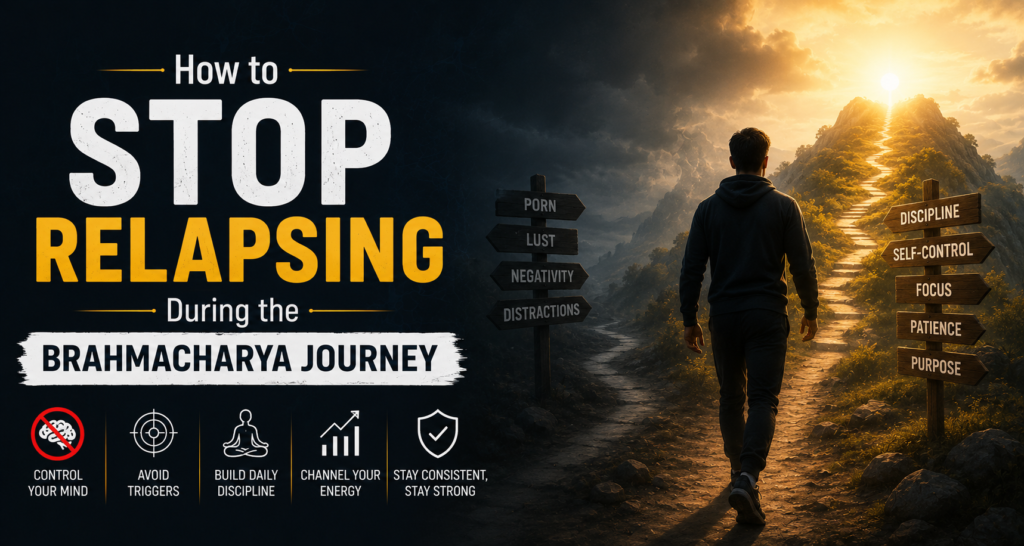
How to Stop Relapsing During the Brahmacharya Journey
Relapse is one of the greatest challenges people face when adhering to Brahmacharya. Almost everyone starts with a high level of motivation, determination, and discipline, but after a few days or weeks, they end up back on the same track. This cycle of things can be very frustrating, guilt-inducing, self-doubting, and demoralizing. This is why many individuals are finding viable solutions to Stop Relapsing in Brahmacharya and ensure long-term consistency.
The reality is that a lack of willpower scarcely causes relapses. The majority of the relapses occur due to the behavior of the brain being trained to be instantly gratified, stimulated by dopamine, dependency on pornography, withdrawal patterns, and addictive behavior. Even highly motivated people find it difficult to ensure that Brahmacharya is upheld at all times without rectifying these underlying problems.
It takes more than mere encouragement to learn how to Stop Relapsing in Brahmacharya. This involves dopamine discipline, brain rewiring, emotional awareness, routine design, and systems of long-term self-control. Discipline can be achieved much more easily when the underlying factors contributing to relapses are properly addressed.
This is precisely why recovery systems imparted at ManthanHub, under the leadership of Radheshyam More, focus on PMO recovery, dopamine remedies, emotional stability, and long-term Brahmacharya alteration.
Why Most People Relapse During Brahmacharya
It is important to understand the reason for relapse before learning how to Stop Relapsing in Brahmacharya. The majority of society self-accuses, but the causes are usually more profound than mere lack of discipline.
Years of Dopamine Conditioning
Pornography, social media compulsions, fantasy thought processes, and immediate satisfaction behaviors condition the brain to demand stimulation on a regular basis. Such neural pathways persist for a while even after the commencement of Brahmacharya.
Emotional Triggers
Urges and patterns of relapse are usually triggered by stress, loneliness, boredom, anxiety, frustration, rejection, and emotional distress.
Lack of Recovery Systems
Most individuals attempt to rely solely on motivation without establishing routines, accountability mechanisms, or realistic recovery methods.
Exposure to Triggers
It is much more probable to relapse because of constant exposure to pornography, reels, sexualized materials, and unhealthy digital habits.
Identify Your Personal Relapse Triggers
One of the most important steps to Stop Relapsing in Brahmacharya is identifying what triggers your urges. Most relapses are not random. They usually follow specific patterns.
Common triggers include:
- boredom
- loneliness
- stress
- late-night phone usage
- social media scrolling
- pornography exposure
- emotional frustration
- lack of productive activity
When you identify your triggers, you can interrupt the pattern before relapse occurs.
Stop Depending Only on Motivation
Brahacharya is a practice adopted by many individuals after watching an inspirational video or being temporarily inspired. The thing is, the motivation evolves every day.
When your recovery process is based solely on motivation, relapse is all but certain. Individuals who manage to Stop Relapsing in Brahmacharya are oriented toward systems rather than emotions.
Strong systems include:
- structured routines
- fixed sleep schedules
- exercise habits
- accountability systems
- productive daily goals
- trigger management strategies
Systems continue working even when motivation disappears.
Practice Dopamine Discipline Daily
One of the most effective ways to Stop Relapsing in Brahmacharya is through dopamine discipline. Many individuals try to quit PMO while continuing:
- endless scrolling
- reels addiction
- binge watching
- gaming addiction
- digital overstimulation
This keeps the brain dependent on stimulation and instant gratification.
Reduce Social Media Consumption
Over-scrolling enhances impulsive behavior and reduces self-control.
Limit Short Video Content
Reels and short-form content stimulate the brain to seek immediate rewards.
Reduce Digital Overstimulation
Reduced compulsive desire and more concentration are enjoyed by a calmer brain.
The principles in Dopamine Discipline are used to make people realize the impact of overstimulation on the process of relapse and the role of dopamine restoration in recovery.
Build a Structured Daily Routine
Lack of proper structure usually makes the relapse ideal. Individuals who successfully Stop Relapsing in Brahmacharya tend to have well-regulated schedules that minimize boredom and uncontrollable behavior.
Maintain Fixed Sleep Timing
Late nights tend to make us more vulnerable to urges and make poor decisions.
Schedule Productive Activities
A full and meaningful mind will be less susceptible to compulsive practices.
Include Exercise Daily
Exercise enhances control over dopamine, confidence, emotional stability, and self-control.
Prioritize Self-Development
A healthier mind focus is established by learning, reading, fitness, business, and personal development.
Learn Emotional Control Instead of Escaping Emotions
Many relapses are emotional rather than physical. People often use PMO as temporary relief from:
- stress
- anxiety
- loneliness
- boredom
- sadness
- frustration
In case these emotional stimuli go unaddressed, relapse patterns persist. In order to prevent the relapse in Brahmacharya, emotional awareness is crucial.
This process provides greater long-term stability by fostering the learning of healthier methods of processing emotions.
Avoid High-Risk Situations
It takes prudent decisions to recover successfully. Several individuals keep on exposing themselves to situations where they experience urges and keep asking them why they can not stop relapsing.
Avoid Trigger-Based Content
Unfollow pages, accounts, and platforms that continuously stimulate lust and fantasy.
Reduce Alone Time With Digital Devices
Late-night isolation combined with unrestricted device access increases relapse risk significantly.
Create a Recovery-Friendly Environment
Your environment should support discipline rather than encourage temptation.
Focus on Brain Rewiring Instead of Suppression
Suppression is one of the greatest errors one commits in an attempt to cease relapsing in Brahmacharya. They attempt to resist all their urges in a violent manner without realizing that the brain needs rest as well.
Real transformation happens when:
- dopamine balance improves
- neural pathways weaken
- emotional regulation strengthens
- healthier habits replace compulsive behavior
Brain rewiring creates sustainable change.
How Books Help Prevent Relapse
Recidivism is always likely when individuals forget why they embarked on the Brahmacharya journey. The motivation is initially high; however, with time, old habits, emotional stimuli, cravings for dopamine, and mental conditioning begin to gain strength again. It is here that books are influential. The correct books are constantly reminding people of the perils of addiction to PMO, the need to be self-disciplined, and the practical measures required to discipline oneself.
For people attempting to Stop Relapsing in Brahmacharya, the books serve as their guide or mentor, providing clarity, motivation, and practical recovery systems when they find themselves in trouble. Books contribute to the formation of long-term knowledge and better mental training than relying on temporary inspiration from videos and social media posts.
Books Help You Understand Why Relapse Happens
The reason why many people relapse several times is that they are not fully aware of the psychological and neurological causes of their desires. They tend to self-accuse rather than accept that they are addicted to dopamine and that certain emotional triggers and compulsive patterns of behavior are present.
Books help individuals understand:
- why cravings become stronger
- How relapse cycles develop
- How dopamine addiction affects the brain
- Why emotional triggers cause urges
- How recovery actually works
This awareness helps individuals respond intelligently instead of emotionally during difficult moments.
Books Strengthen Mental Discipline
An individual reading recovery-oriented materials is always strengthening the discipline-oriented thinking. This assists in building a better conditioning of the mind in the long run.
Reading daily reminds individuals to stay focused on:
- self-control
- discipline
- long-term goals
- Brahmacharya principles
- personal growth
Dopamine Discipline Book Helps Break Relapse Patterns
Dopamine Discipline is one of the best resources for individuals attempting to Stop Relapsing in Brahmacharya.
It describes how self-control is compromised by excessive stimulation of the senses by pornography, social media, reels, video games, and immediate gratification, which leads to high chances of relapse.
It teaches practical concepts such as:
- dopamine correction
- urge management
- brain rewiring
- self-control systems
- focus improvement
- discipline development
This knowledge helps individuals identify relapse triggers before they become actions.
Books Help Rewire Thought Patterns
Relapse may take root in the mind even before it becomes an action. Fantasies, thinking about emotional escape, and bad mental habits are gradually adding up to the risk of relapse.
Books help replace these unhealthy patterns with:
- disciplined thinking
- growth-oriented mindset
- self-awareness
- emotional control
- purpose-driven behavior
Books Provide Guidance During Difficult Phases
Any Brahmacharya path entails high and low mood swings, mood sinks, mood insecurities and self-doubts. In such situations, most of us are lost and feel vulnerable.
Books are a good source of information, especially when one requires guidance the most. Returning to the major lessons can frequently help individuals find their picture and a more significant commitment, and prevent hasty choices.
Books Help Build Long-Term Recovery Mindset
Most relapses occur because individuals focus on temporary containment rather than permanent change. Books help shift the attitude from temporary abstinence to a total lifestyle change.
They encourage individuals to focus on:
- personal growth
- emotional stability
- self-mastery
- discipline
- purpose-driven living
- Brahmacharya lifestyle development
This mindset significantly reduces relapse risk over time.
The Superhuman Lifestyle Helps Strengthen Recovery
The other strong tool is The Superhuman Lifestyle, as its emphasis is on developing discipline, confidence, self-mastery, and mental strength, and on living according to Brahmacharya.
With the book, people will be able to develop a greater sense of identity around discipline and growth, so relapse will be less alluring and self-control will become more natural.
Common Mistakes That Cause Repeated Relapse
There are numerous individuals who lack the knowledge of repeating behaviors, which complicates the recovery.
- Expecting Instant Results: Years of conditioning cannot disappear within a few days.
- Depending Only on Willpower: Willpower is important but insufficient without systems.
- Ignoring Dopamine Addiction: Overstimulation keeps compulsive pathways active.
- Staying Consistently Triggered: Constant exposure to stimulating content weakens discipline.
- Living Without Purpose: Lack of meaningful goals increases vulnerability to compulsive habits.
How ManthanHub Helps You Stop Relapsing in Brahmacharya
Most people find it difficult due to their efforts to get back on their feet on their own without knowing the underlying reasons that cause the relapse.
ManthanHub focuses on helping individuals create lasting recovery through:
- dopamine discipline systems
- PMO recovery frameworks
- brain rewiring methods
- emotional correction
- self-control development
- accountability support
- routine rebuilding
- Brahmacharya transformation
Results You Can Expect After Learning to Stop Relapsing in Brahmacharya
Individuals who consistently apply recovery systems often experience major improvements.
- Stronger Self-Control: Urges become easier to manage naturally.
- Better Emotional Stability: Stress and emotional triggers become less overwhelming.
- Reduced PMO Dependency: Compulsive behaviors weaken gradually.
- Improved Focus and Productivity: Mental clarity improves significantly.
- Stronger Confidence and Self-Respect: Consistency builds trust in yourself again.
- Long-Term Brahmacharya Success: Maintaining discipline becomes much more sustainable.
Conclusion
Brahmacharya learning how to Stop Relapsing does not mean that one will be perfect in one day. It is regarding the reasons for the occurrence of the relapse, the restoration of dopamine addiction, emotional control, routine reinforcement, and re-rewiring of the brain step by step. The majority of relapses are symptoms of further conditioning, not a lack of willpower.
By designing systems that focus on dopamine discipline, PMO recovery, emotional correction, self-control development, and long-term transformation, taught by ManthanHub under the guidance of Radheshyam More, people can successfully Stop Relapsing in Brahmacharya, restore confidence, enhance discipline, and establish Brahmacharya as a healthier, more stable lifestyle.