


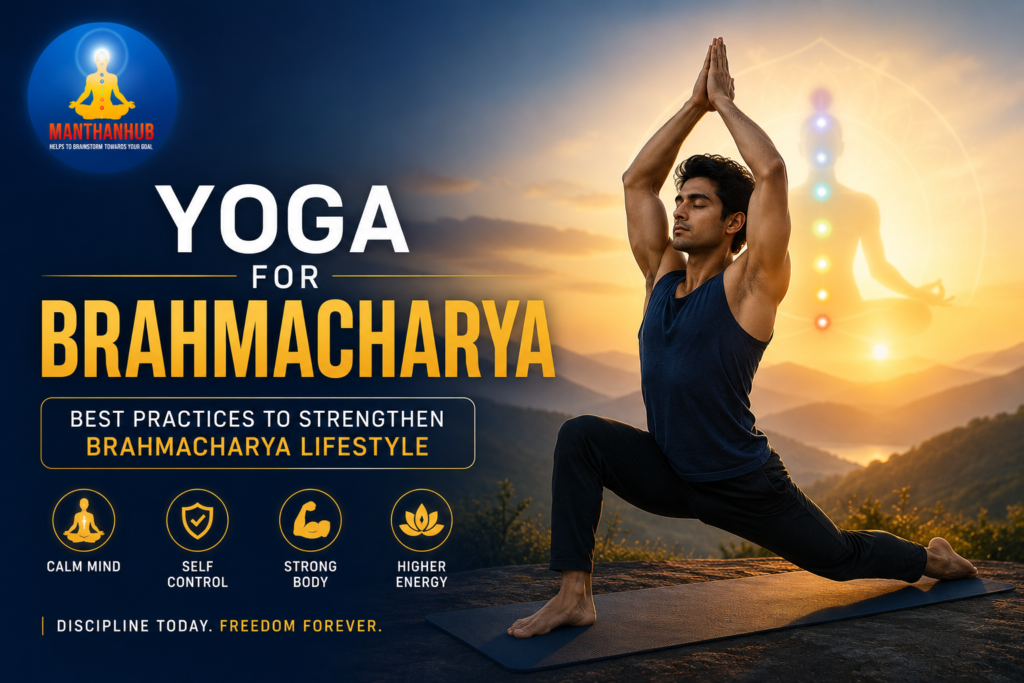
A successful lifestyle of Brahmacharya means much more than the absence of unhealthy habits. One of the best ways to enhance self-control, emotional stability, mental clarity, and physical discipline is yoga for Brahmacharya; it is one of the most effective natural practices. In the modern age, with pornography, social media, instant gratification, and digital distractions repeatedly overstimulating the brain, it has become harder and harder to be focused and have self-discipline.
Although some individuals attempt to strengthen their will on their own, yoga offers an experience through which one can easily quiet the mind, control emotions, and become more conscious of thoughts and actions.
Yoga for Brahmacharya is much more than just a workout. It is a combination of body, emotion, awareness, and control so as to produce a balance between the body and mind. Practiced regularly, Yoga for Brahmacharya allows one to alleviate mental turbulence, enhance concentration, emotionally sustain oneself, and promote long-term PMO recovery and self-integrity.
Why Yoga Is Important for Brahmacharya
Brahmacharya involves a serene mind, an ablutionary body, and emotional moderation. However, nowadays it is not easy to strike this balance due to stress, overstimulation, and bad habits that consumers live with. Yoga for Brahmacharya can help people build the physical and mental self-control required to practice long-term self-control and increase overall well-being.
Yoga Improves Mind-Body Awareness
Many unhealthy habits go unspoken because they occur automatically, as people are not in touch with their thoughts, emotions, and physical senses. Yoga for Brahmacharya heightens the sensitivity of the body and mind to the effects of stress, emotions, and distraction. When people become more aware, they can identify urges and prevent them from becoming actions with much greater self-control.
It Helps Control Impulsive Thoughts
The overstimulated mind is like a jump from one thought to another, making it hard to stay focused. Yoga habits promote mental calmness, enhance focus, and bias a person against impulsive action. This enables them to react more consciously to situations rather than focusing on urges and distractions and reacting automatically.
Yoga Supports Emotional Stability
The emotional instigators of PMO addictions and relapses are stress, frustration, anxiety, boredom, and loneliness. Yoga for Brahmacharya has calming effects on the nervous system, reducing emotional tension and improving overall mental health. The less favorable coping styles become less and less desirable as emotional stability increases.
Regular Practice Strengthens Discipline
Yoga is based on consistency. Being there day in and day out in your practice builds up patience, commitment, and self-discipline. These attributes can naturally be applied to other aspects of life, making it easier to sustain Brahmacharya, maintain healthy habits, and remain invested in a single long-term goal.
Yoga for Brahmacharya: Best Practices for Brahmacharya
Different yoga poses assist the body and mind in various ways. Although no single pose is guaranteed to make Brahmacharya a success, it may enhance flexibility, reduce stress, raise awareness, and build the discipline one needs to sustain the practice and achieve long-term recovery. These are some yoga practices you can incorporate into your Yoga for Brahmacharya.
Surya Namaskar (Sun Salutation)
A full dish of yoga poses, Surya Namaskar activates the whole body and enhances flexibility, strength, circulation, and energy levels. Being committed to it in the mornings helps eliminate laziness, wake up the mind, and build the discipline to spend the day productively. It is also a good way to release physical energy in a healthy manner; it helps the person through their Brahmacharya process.
Vajrasana (Thunderbolt Pose)
Vajrasana is an easy sitting posture that is usually practiced after eating and during meditation. It helps maintain a still, closed posture while promoting better breathing and mindfulness. It is an effective posture for strengthening self-control through regular practice, building patience, stillness of mind, and greater awareness of thoughts.
Padmasana (Lotus Pose)
Padmasana is a very familiar meditation sitting position. It induces balance, meditation, and awareness within the human body by stimulating stillness and greater attentiveness of the mind. Meditation in Padmasana has the power to help the patient become more emotionally regulated and in control of distracting thoughts.
Bhujangasana (Cobra Pose)
The back, chest, and posture are firmer in Bhujangasana, helping to reduce physical tension in these areas caused by prolonged sitting or stress. Improved posture and breathing normally lead to increased confidence, higher energy levels, and better emotional well-being, all of which are effective in long-term Brahmacharya.
Paschimottanasana (Seated Forward Bend)
The pose invigorates the spine and hamstrings, and it promotes relaxation. It enhances mental tranquility by diminishing physical agitation. Practice aids one to slow down, become more body-conscious, and develop a more peaceful state of mind that contributes to disciplined living.
Sarvangasana (Shoulder Stand)
Sarvangasana is an advanced posture that must be performed properly with guidance, particularly for novices or those with neck, shoulder, or other medical problems. When done safely, it can aid in greater circulation, focus, and general body awareness and promote mental discipline and focus.
Shavasana (Corpse Pose)
Though it sounds easy, Shavasana teaches total body and mind relaxation. It also helps calm the nervous system, reduce stress, and enhance mindfulness after yoga. Developing the skill of mindful relaxation without digital aids or the usual frenzy is a key aspect of Yoga in Brahmacharya.
Breathing Practices That Support Brahmacharya
Mind and breath are intimately related. The mind also tends to be in a pensive, jumpy state when breathing is quick and spasmodic. Conversely, deliberate, slow breathing will enhance relaxation, improve concentration, and help manage emotions. It is recommended to incorporate pranayama into your regular Yoga practice during Brahmacharya to enhance psychological discipline and aid the long-term process of overcoming bad habits.
Anulom Vilom (Alternate Nostril Breathing)
Anulom Vilom balances the nervous system to balance the flow of breath by using alternate nostrils. Regular practice is beneficial for enhancing concentration, alleviating stress, and developing emotional stability. With a more relaxed state of mind, the individual will be less likely to act immediately when distracted, and hence this breathing routine will be of much help to people who have been living under the Brahmacharya lifestyle.
Bhramari Pranayama (Bee Breathing)
Bhramari is making a low humming noise during the exhale, and this can assist in calming the mind and silencing mental noises. Especially handy in times of anxiety, frustration or emotional overwhelm. Bhramari can be practiced every day to help you understand yourself and cultivate a sense of inner peace that allows you to live with control.
Kapalabhati
Kapalbhati is a breathing practice considered an energizer, but it should be performed properly and may not be suitable for everyone, especially those with certain medical conditions. Properly taught, it may enhance the efficiency of the respiratory system, raise alertness, and assist in preserving a disciplined moral routine supportive to the yoga of Brahmacharya.
Deep Breathing Practice
One of the simplest ways to regain control during urges or emotional stress is through deep breathing. Slow, controlled breathing will stimulate the body’s relaxation response, relieve tension, and create space in the mind to make conscious decisions rather than automatic reactions.
Common Mistakes While Practicing Yoga for Brahmacharya
Yoga for Brahmacharya is a strong practice; its results rely on regularity, patience, and a balanced life. The reason many people get discouraged is that they want immediate changes or fail to focus on other important issues in recovery. By avoiding these errors, you can enjoy the most of yoga as applied to Brahmacharya.
Practicing Without Consistency
Practicing yoga here and there will be of little use. Regular practice yields long-term benefits for self-control, flexibility, emotional regulation, and attention. Even a little practice, 20 to 30 minutes a day, is more effective than long but seldom sessions.
Expecting Instant Results
Practicing yoga here and there will be of little use. Regular practice yields long-term benefits for self-control, flexibility, emotional regulation, and attention. Even a little practice, 20 to 30 minutes a day, is more effective than long but seldom sessions.
Ignoring Meditation
It is not necessary to do only physical postures. Meditation enhances awareness and aids in witnessing thinking without having to be responsive, as well as emotional management. A blend of yoga and meditation offers a more holistic approach to self-discipline and healing.
Continuing High-Dopamine Habits
Taking yoga and spending hours on social media, watching pornography, or always trying to get instant satisfaction hinders progress. Limiting the digital stimuli we do not require means our minds will have a deeper experience of yoga and mindfulness.
Depending Only on Yoga
Though yoga and Brahmacharya are highly vital, the only way to bring long-lasting change is to get proper sleep, eat a balanced diet, work with purpose, exercise the body, develop spiritually, and be emotionally conscious. Yoga is not a solution; it is more effective as part of a whole lifestyle.
How Books and Meditation Enhance Yoga for Brahmacharya
Yoga would be better with the appropriate knowledge and understanding. The discipline that is attained on the yoga mat is reinforced by reading transformational books and practicing meditation on a daily basis. Taken together, these practices provide a strong foundation for Brahmacharya in the long run.
Dopamine Discipline Supports Mental Control
Dopamine Discipline describes the impact of extreme stimulation of dopamine on focus, habits and the decision-making process. It also offers help in creating practical solutions to curb overstimulation and in developing mental discipline to supplement your yoga practice.
The Superhuman Lifestyle Builds Long-Term Discipline
A superhuman lifestyle is all about intentional practice, emotional resilience, confidence, and self-mastery. These ideals are perfectly in line with the objectives of Yoga, particularly Brahmacharya, and serve to keep readers consistent on their path.
Daily Reading Reinforces Healthy Habits
Good and instructive daily reading will keep the mind growing rather than immediate enjoyment. This habit, combined with meditation and yoga, enhances motivation and brings about long-term lifestyle changes.
How ManthanHub Helps Build a Complete Brahmacharya Lifestyle
Yoga is a great start, yet most individuals require that systematic assistance to get over PMO addiction, emotional triggers, and inconsistent routines. ManthanHub provides complete programs that include practical training, brain rewiring, and mentorship to help achieve long-term change.
PMO Recovery Programs
Step-by-step PMO recovery programs help individuals identify triggers, build healthier routines, and develop lasting self-control while supporting their Brahmacharya journey.
Dopamine Discipline Systems
These systems focus on reducing dependence on instant gratification, improving concentration, and strengthening mental resilience through practical daily habits.
Brain Rewiring Methods
Structured brain rewiring techniques help replace unhealthy thought patterns with disciplined behaviors, making it easier to maintain consistent progress over time.
Personal Recovery Sessions
One-to-one mentoring with Radheshyam More provides personalized guidance, accountability, and practical solutions tailored to each individual’s recovery challenges.
Books and Structured Guidance
ManthanHub’s books, courses, and educational resources provide continuous motivation while helping individuals develop a complete lifestyle focused on discipline, purpose, and self-mastery.
Results You Can Expect from Yoga for Brahmacharya
When practiced consistently alongside healthy daily habits, Yoga for Brahmacharya can positively influence both physical and mental well-being. The goal is not perfection but gradual improvement through disciplined living.
Better Self-Control
Improved awareness and emotional regulation make it easier to pause before reacting to urges, helping individuals make healthier decisions consistently.
Improved Emotional Stability
Regular yoga and breathing practices reduce stress, calm the nervous system, and promote emotional balance, making everyday challenges easier to manage.
Stronger Focus
A disciplined yoga routine improves concentration and mental clarity, allowing individuals to stay focused on work, studies, relationships, and personal growth.
Reduced Stress
Physical movement, mindful breathing, and relaxation techniques help lower stress levels, reducing one of the common emotional triggers associated with unhealthy habits.
Better Physical and Mental Energy
Consistent practice improves flexibility, posture, circulation, and overall vitality while encouraging a more energetic and productive lifestyle.
Sustainable Brahmacharya Lifestyle
Rather than relying solely on willpower, yoga helps build habits that naturally support long-term discipline, making Brahmacharya a sustainable way of living.
Conclusion
One of the most effective methods of strengthening self-control, emotional balance, and the discipline required to live a healthy and fulfilling life is practicing Yoga for Brahmacharya. Although yoga may not change a habit within a day, a combination of physical work, breathing, and meditation, along with a daily routine, provides solid ground for permanent personal development. With time and practice, users will notice they are more focused, experience less stress, are more self-aware, and have more control over impulsive behaviors.
In need of a more organized approach to yoga, ManthanHub offers a full range of recovery programs (PMO), drug-discipline programs, brain rewiring techniques, and individual mentoring by Radheshyam More.
Dopamine Discipline, The Superhuman Lifestyle, Dopamine is Destroying Your Life, and Eternal Bond are some of the resources that will provide you with the necessary information to practice a habit of discipline that can bring you years of success, make breaking unhealthy habits a thing of the past, and allow you to live a healthy yet balanced life through a dimension of Brahmacharya in the years ahead.
FAQs
1. Is Yoga for Brahmacharya helpful for improving self-control?
Yes. Regular yoga practice improves mindfulness, emotional regulation, and discipline, making it easier to manage urges and maintain self-control.
2. Which yoga poses are best for Brahmacharya?
Surya Namaskar, Vajrasana, Padmasana, Bhujangasana, Paschimottanasana, Sarvangasana (with proper guidance), and Shavasana are commonly practiced to support focus and overall well-being.
3. Can yoga reduce lustful thoughts?
Yoga helps calm the mind, reduce stress, and improve awareness. While it does not eliminate thoughts completely, it can help individuals respond to them more consciously.
4. How often should I practice Yoga for Brahmacharya?
A daily practice of 20–45 minutes, combined with meditation and healthy lifestyle habits, is generally more beneficial than occasional long sessions.
5. How does ManthanHub support a Brahmacharya lifestyle?
ManthanHub offers PMO recovery programs, dopamine-discipline systems, brain-rewiring techniques, personal mentoring, and educational resources to help individuals develop lasting self-control and a disciplined lifestyle.