


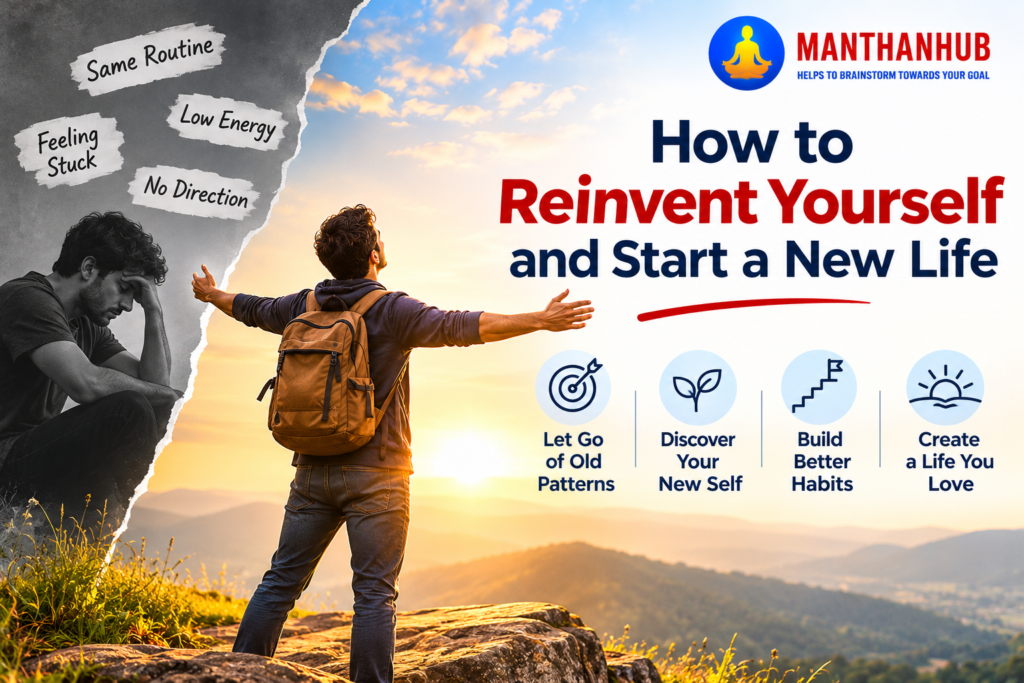
There are times when you look at your life and realize that something needs to change. Your habits might be at odds with your ambitions; your job or profession might not be satisfying, or even your daily routine might no longer reflect the person you aspire to be. You could also be dragging along past disappointments, limiting assumptions, and experiences that make it hard to get ahead. Sometimes you find yourself thinking about how to reinvent yourself and lead a life that feels more meaningful.
Reinventing does not mean repenting of your past or completely changing into another person overnight. It involves acknowledging what is no longer working, knowing what you really desire, and taking focused action to change your thinking, habits, choices, and lifestyle.
You want to switch professions, enhance your relationships, become more confident, or create a new identity: change starts with choosing to be responsible for your future.
Why Do You Feel the Need to Reinvent Yourself?
The urge to begin anew usually emerges when someone carrying on with his or her life is no longer satisfied with his or her interests. You might have already attained some of your goals but still not be satisfied, or you might discover habits that are preventing you from progressing.
Individuals have various reasons for considering personal reinvention.
You Feel Stuck in the Same Routine
You get up, go about your duties, and get distracted, and the cycle goes in circle. And yet, even though your days may stay busy, you might not be able to sense that you are heading anywhere worthwhile.
Your Priorities Have Changed
What were your initial motivational goals? They might no longer be the interests that you have. What makes you consider yourself successful might evolve as you get more experience.
You Want to Break Old Habits
They might no longer be the interests that you have. What makes you consider yourself successful might evolve as you get more experience.
Past Experiences Are Holding You Back
Failures, errors, and not getting things right may affect your perception of yourself. You may still associate yourself with a version of yourself that is much older than you are, rather than focus on what you can be.
Recognizing these reasons for how to reinvent yourself helps you understand what needs to change. If you are struggling with repeated negative thought patterns, explore how to stop overthinking and take control of your thoughts as a starting point for developing a more constructive mindset.
How to Start Over in Life Without Feeling Overwhelmed
When you choose how to reinvent yourself, you may want to change everything at once. You can set a big plan, work to achieve several things, and think you’ll adopt an entirely different lifestyle the next day.
This strategy can also make a lot of change hard to maintain, as it requires too much change at once.
Identify What Is Not Working
Analyze your career, daily routine, romantic life, health, and personal priorities. Find out what areas are bringing discontent or thwarting progress.
Decide What You Want to Change
Be specific about the improvements you want. For example, you might want to improve communication, become financially self-sufficient, become more physically fit, or build a more disciplined habit.
Separate Immediate Changes From Long-Term Goals
Some changes can be initiated today, while others must be planned and prepared. A major change can take a long time (you may need extra skills, research, and financial planning), but you can start reading regularly as soon as possible.
Focus on One Priority at a Time
Choose the area that needs the most attention and begin there. Once you establish progress, introduce another change.
Learning how to build self-discipline and stay consistent in life can also help you maintain the commitments you make during this process.
Change Your Mindset Before Changing Your Lifestyle
Your perspective shapes the way you perceive circumstances, handle difficulties, and make choices. When you keep thinking about yourself based on the constraints of your past, you might not be able to create a different future.
One example is someone who constantly repeats to himself that he is not fit to do something and refuses to take an opportunity when he could learn and get better.
When exploring how to reinvent yourself, changing your thinking means not turning a blind eye to challenges and trying to think positively every minute. It involves learning to become more balanced in your perception of your situation.
Stop Defining Yourself by Past Mistakes
One bad choice or unsuccessful experience will not shape up your whole future. Notice what has taken place, know what you have learnt, and never repeat the same pattern.
Challenge Limiting Beliefs
When you eventually believe that you cannot attain something or ability to perform some task, question the facts. Ask whether it is a fact or a supposition based on a past experience.
Take Responsibility for Your Decisions
You cannot control every situation, but you can take responsibility for how you respond and what you do next.
Develop a Growth-Oriented Approach
Treat challenges as opportunities to learn rather than proof that you are incapable.
The ManthanHub Brain Rewire Framework offers a structured resource for exploring habits, behavioural patterns, and the process of working towards personal change.
Identify the Habits You Need to Leave Behind
Welcome challenges as learning opportunities instead of demonstrations that you can not.
The ManthanHub Brain Rewire Framework provides an organized source to investigate the habit and types of behaviour and how to work towards change.
Start by examining your everyday routine.
Reduce Unnecessary Screen Time
You cannot create a new life when you are constantly repeating the same actions that keep you in a rut. Reinvention means identifying behaviours that take your time, influence your priorities, or stop you from pursuing what you intended to accomplish.
Stop Procrastinating on Important Tasks
Constantly checking notifications, scrolling social media, and reading material that lacks purpose can distract from vital activities.
Avoid Negative Self-Talk
Repeatedly criticising yourself can make it harder to recognize progress. Replace unhelpful self-judgement with honest evaluation and practical action.
Build Better Daily Routines
If digital distractions are affecting your attention, explore the Dopamine Detox Course for educational guidance on managing digital habits and developing more intentional behaviour.
Build a New Identity Through Consistent Actions
When you consider how to reinvent yourself, the first thought is often outward changes, including looks, profession, place, or social groups. These changes may be practical; however, long-term personal transformation, it also relies on the behaviors that you are practicing on a daily basis.
The things that you do over and over again shape who you are.
For example, if you want to be a confident person, start speaking up in situations where you usually keep quiet. To be disciplined, you can make small commitments for when you are not motivated. To gain enlightenment in a specific area, don’t stop making time to study.
Start with a few practical commitments:
- Read for 15 minutes every day.
- Exercise or walk regularly.
- Complete your most important task before entertainment.
- Learn a skill that supports your future goals.
- Spend time with people who encourage positive growth.
- Review your progress at the end of each week.
Do not try to create an entirely new personality through temporary changes. Focus on becoming someone whose everyday actions reflect their intentions.
You can also explore how to create a better version of yourself for additional ideas on developing positive habits and improving different areas of your life.
Change Your Environment and Surround Yourself With Growth
The environment you are in controls your habits, choices, and behaviour day to day. When you are in an environment that distracts you or is negative or surrounds you with bad habits, it would be harder to keep up with the new habits.
This does not mean you have to leave everyone in your life or make drastic changes to your social life. It means being more conscious of the environments and associations you choose.
Organise Your Physical Space
Keep your workspace clean and arrange it to support the activities you want to prioritise. A more organized environment can make it easier to begin important tasks.
Choose Your Influences Carefully
Spend more time with people who encourage learning, accountability, and constructive conversations.
Find New Learning Opportunities
Explore books, courses, workshops, and communities connected to your interests and goals.
Create Boundaries Around Distractions
Limit unnecessary interruptions and make time for activities that support your personal development.
If you want more structured learning opportunities, explore ManthanHub’s personal development courses and identify resources that align with your goals.
Develop Emotional Strength and Learn From Your Past
Respond to these experiences without allowing temporary setbacks to define your future.
Accept What You Cannot Change
Not all past events can be rewritten. Focus on what has occurred and how you would like to proceed.
Avoid Repeating Old Patterns
Notice the situations that lead you into unhelpful habits or choices. Find what you can do differently when similar situations arise.
Give Yourself Time to Adjust
It takes practice to change known routines and behaviors. Not all new habits will become natural overnight.
Learn to Respond Instead of React
Take time to make choices when you are frustrated or disappointed. Buy yourself time to think things over and deliberate on your part.
When stress is affecting you and your ability to maintain healthy routines, consider stress relief and emotional balance as a source of learning materials on how to cope with difficult emotions.
If stress is affecting your ability to maintain healthy routines, explore stress relief and emotional balance for educational resources on managing difficult emotions.
Set New Goals for Your Future
Before exploring how to reinvent yourself, get a clear idea of where you want to go; reinvention becomes more feasible. Without real ambitions, you risk going back to old habits because you lack a plan for where to go.
Begin by envisioning what you want your life to be like in a year.
You can aim to improve your job prospects, achieve financial security, build healthier relationships, acquire new skills, or become more active.
Break down these objectives into mini actions.
For example, if you decide to change occupations, research the sector, identify the competencies you should have, and develop a learning plan. When you want to get healthy, set attainable exercise and nutrition schedules instead of an extreme exercise plan.
Periodically review your goals. You can also reconsider your priorities and change your plans as you gain experience; it’s part of personal development.
If you find yourself repeating the same behaviours after stressful experiences, read Habit Relapse Under Stress to understand how difficult situations can disrupt progress.
How to Stay Consistent During Your Self-Transformation Journey
Starting a new routine can be easy compared to maintaining it. The initial days might be exciting, but when results don’t appear on time, you might get demotivated.
To get through it, you need to be consistent with your self-transformation and not rely on constant excitement.
Track Your Actions
Keep a simple record of the habits and tasks you complete. This helps you recognise patterns and understand where you need improvement.
Focus on Progress Instead of Perfection
Missing one workout or having an unproductive day does not mean your entire plan has failed. Return to your routine instead of abandoning it.
Review Your Priorities Weekly
Evaluate what is working, what is creating difficulty, and what needs to change.
Celebrate Meaningful Milestones
Recognize progress such as completing a course, maintaining a routine, or developing a new skill. These milestones can help you stay connected to your long-term goals.
For another perspective on building intentional habits and self-control, explore the Dopamine Discipline book guide.
Conclusion
Reinventing yourself is not about forgetting your past and becoming a totally different individual in a short period of time. It is knowing what you need to change, setting aside habits that are not serving you, and adopting behaviours that reflect the future you are determined to build.
The first step is to get your priorities straight, shift your thinking, build better habits, and hold yourself accountable for your choices. It is not mandatory that you change all spheres of your life at the same time. Routine activities you perform over time can help you make a significant and sustainable change.
When you are ready to change your mindset, habits, focus, and personal development, ManthanHub provides brain-rewiring tools, personal development courses, and educational technology to help you transform.
Explore ManthanHub and take the first step towards building a more focused, confident, and purposeful version of yourself.